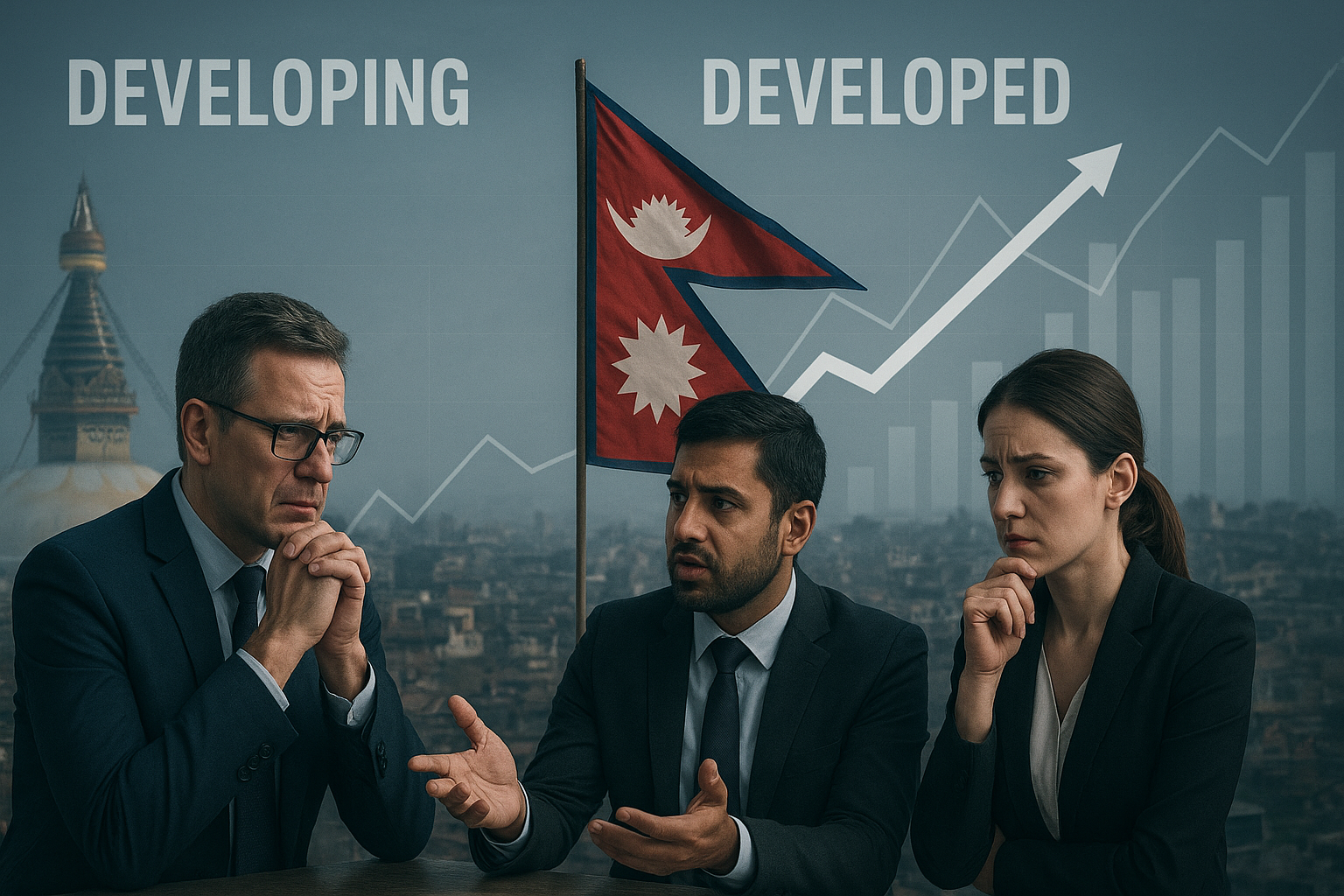
In November 2026, Nepal will leave the United Nations’ Least Developed Country (LDC) category. This is a big step forward for the country’s economy and society. Experts, on the other hand, warn that this change could backfire if Nepal isn’t ready for what it will mean. Some possible risks are losing preferential trade access, having weaker exports, having to pay more for financing, and the economy as a whole becoming more vulnerable. Policymakers, investors, and businesses that want to do well in the post-LDC era need to know about these problems.
What does it mean to graduate from LDC?
Countries that meet certain requirements can leave the UN’s Least Developed Country category through the process of LDC graduation. These include meeting minimum levels of Gross National Income (GNI) per person, meeting thresholds in the Human Assets Index (HAI), which shows improvements in health and education, and meeting the Economic and Environmental Vulnerability Index (EVI), which shows that the country is able to handle shocks. Nepal has met these requirements, and the United Nations has given it until November 2026 to make the transition to its new status as smooth as possible.
Why Nepal’s 2026 LDC exit could backfire, experts warn
1. Losing Trade Preferences
When Nepal graduates, it may lose its duty-free and quota-free access to big international markets like the US and the EU. Export industries, especially those that make clothes, textiles, and farm goods, may find it harder to compete and make money.
2. Weak Economic Foundations
Even though Nepal’s economy meets the requirements for graduation, it is still weak. The country’s inability to quickly adapt to new economic realities may get worse because productivity is low, domestic industries are not well-developed, and the political situation is unstable.
3. Timing in the Face of Political and Social Problems
Nepal is dealing with political unrest and social instability right now. These kinds of situations can make it harder for the government to make important changes to the economy, which puts industries and exports at risk during the transition.
4. Dependence on Exports
LDC trade privileges help Nepal’s exports a lot. Without planning, businesses may have trouble keeping their market share or finding new markets, which could mean fewer jobs and lower sales.
Important Things to Worry About Nepal’s 2026 LDC exit could backfire, experts warn
When Nepal’s LDC status ends, it will have an effect on many parts of its economy. If Nepal loses its trade privileges, tariffs may go up and it may be harder for Nepalese goods to get into other markets. The same goes for the cut in concessional financing, which could make it more expensive for the government and private projects to borrow money. Domestic industries that aren’t yet competitive on a global scale may have a hard time, and to keep trade deals like the EU’s GSP+, businesses will need to follow labor, environmental, and governance rules.
Warnings from Experts
A number of economists and business leaders say that Nepal should wait to graduate so that it is better prepared for the change. They say that delaying graduation would give the country more time to improve its infrastructure, stabilize its political and economic environment, and increase its ability to export goods. A suggested delay of at least three years could lower possible risks and give Nepal time to make changes and build up strength in important areas.
Chances Despite Dangers
Nepal’s graduation from LDC status brings both risks and chances. It shows that the world is aware of progress in development, which can make investors more confident. As a developing country, Nepal may be able to get more types of financing, but they may be more expensive. Also, graduation can help people move from relying on aid to making money through trade and creating value at home. This can lead to more industries, higher productivity, and a more diverse economy.
Strategic Steps for Nepal
Nepal should come up with a full plan to avoid problems and make the transition go smoothly:
Increase Export Capacity: Improve the quality of goods and services produced in the country, and open up new markets for exports.
Negotiate Trade Preferences: Try to get into programs like the EU’s GSP+ and work out trade deals with other countries or regions.
Improve governance and compliance by making labor laws, environmental standards, and regulatory frameworks stronger.
Get people to invest in sustainable projects: Don’t rely too much on grants and look for competitive loans and investments.
To keep the economy stable, keep politics stable, build up fiscal buffers, and protect foreign reserves.
Get Stakeholders Involved: Include the private sector, civil society, and policymakers in planning and making decisions.
Questions and Answers About Nepal’s 2026 LDC exit could backfire, experts warn
Q1: When will Nepal no longer be an LDC?
After the UN reviews the eligibility criteria, Nepal will graduate in November 2026.
Q2: What could make it hard for Nepal to graduate?
Nepal’s economy still has problems with low productivity, reliance on exports, and political instability, which could make the transition harder.
Q3: What trade benefits might Nepal lose?
Nepal could lose free trade, low-interest loans, and other trade benefits, which would hurt industries like textiles, clothing, and farming.
Q4: Can Nepal put off graduating from LDC?
Yes, experts say that a three-year delay should be considered to make industries stronger, improve infrastructure, and stabilize the economy.
Q5: What are the most important steps to take for a smooth transition?
Nepal should work on diversifying its exports, making changes to its government, finding long-term funding, getting stakeholders involved, and stabilizing its economy.
Final thoughts
Nepal’s graduation from LDC status in 2026 is a historic achievement that shows how far the country has come in terms of development. Experts, on the other hand, say that the transition could go wrong if it isn’t planned carefully, making the economy more vulnerable, losing trade privileges, and making things harder for domestic industries. The most important thing is to do well in school, focusing on making exports more competitive, changing policies, and making the economy more resilient. Nepal can use its exit from LDC as a springboard for long-term growth and prosperity if it plans ahead and acts quickly.