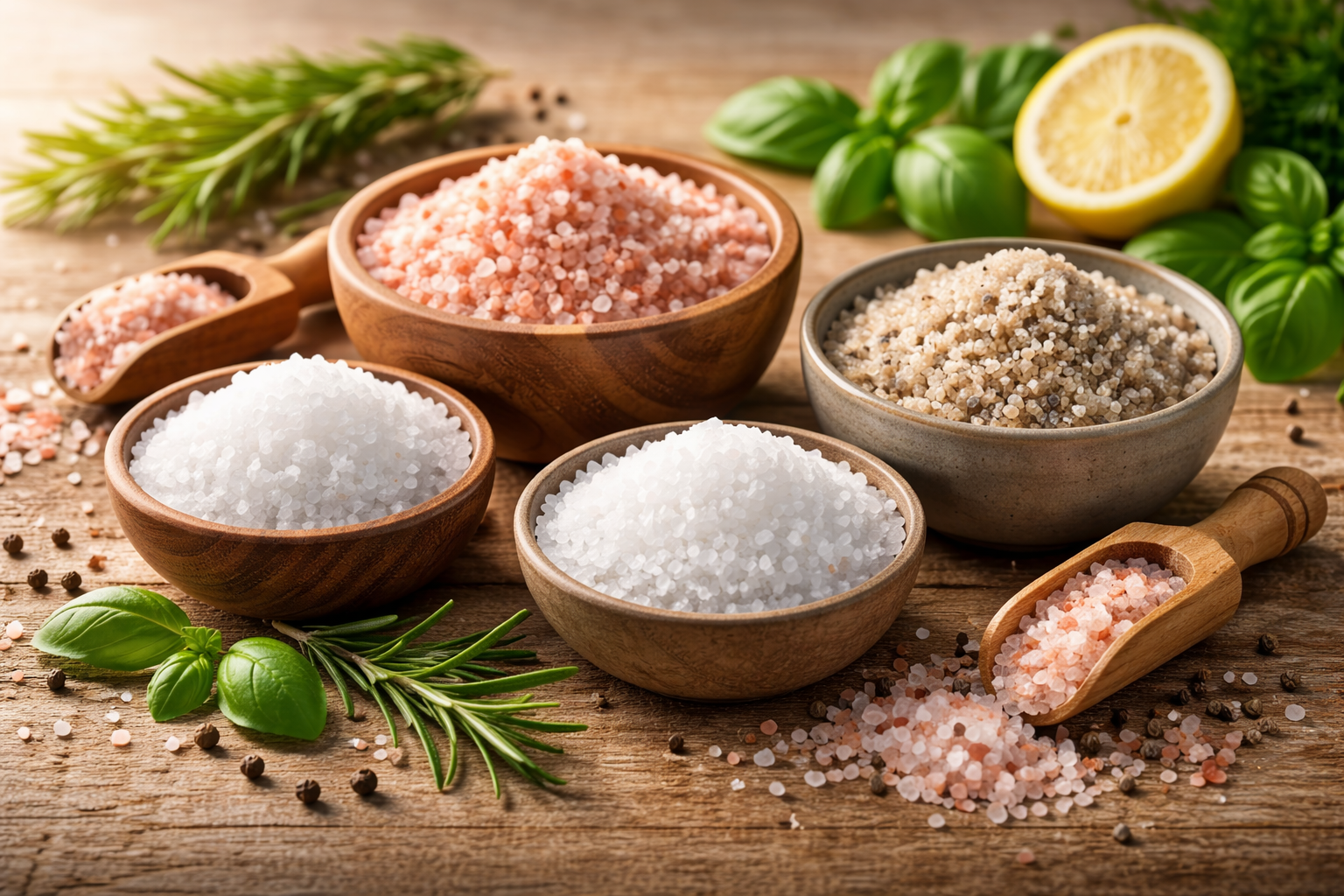
People have always needed salt to live. It is one of the oldest and most vital spices for human survival. Many people want to know which salt is good for their health. There are many different kinds of salt on the market, from table salt to Himalayan pink salt, so it can be challenging to choose the right one. This article gives you a full guide to the health benefits of different kinds of salt, how to use them, and how to make smart choices for a healthier life.
Knowing what salt is and how it affects health
Sodium and chloride make up most of salt. Sodium is an important mineral that our bodies need to keep fluids in balance, send nerve signals, and make sure muscles work properly. Chloride, on the other hand, helps digestion by helping the stomach make hydrochloric acid. Salt is necessary for life, but eating too much of it can cause health problems like high blood pressure, heart disease, and kidney problems. That’s why it’s important to know which salt is good for you and how much to use.
Different Types of Salt
There are different kinds of salt, and they have different minerals, ways of processing, and health benefits. Himalayan pink salt, sea salt, table salt, Celtic salt, and kosher salt are some of the most common types of salt that are still around today. Each kind has its health effects and properties.
Himalayan pink salt
Himalayan pink salt is one of the healthiest salts because it contains beneficial minerals. It comes from old salt deposits in the Himalayas and has small amounts of important minerals like magnesium, potassium, and calcium. These minerals can help keep electrolytes in the body in balance, help you stay hydrated, and improve your health in general. Iron oxide gives it its pink colour and also makes it more nutritious.
Sea salt
Sea salt is made by evaporating seawater, and it is less processed than regular table salt. It has minerals that are beneficial for you, like magnesium, calcium, and potassium. People often choose sea salt because it naturally makes food taste better and is better for your health than heavily processed salts. Many nutritionists say that you should only use sea salt in small amounts when cooking and as a finishing salt for food.
Table salt
Most people use table salt in their homes, but it is heavily refined and often has things like anti-caking agents added to it. Table salt contains sodium that the body needs to function, but it lacks natural minerals, making it less healthy than Himalayan or sea salt. Table salt has too much sodium, which can raise blood pressure and make heart disease more likely. That is why it is not a good source of sodium for a healthy diet.
Celtic salt
Traditional methods are used to get Celtic salt from coastal areas. Because it has minerals in it, it is greyish in colour and keeps various trace elements that are good for health. This kind of salt is known for its mild taste and high mineral content, which may help balance electrolytes and support the body’s functions as a whole. Celtic salt is a popular choice among health-conscious people because it is natural, minimally processed, and full of nutrients.
Kosher salt
Kosher salt is a coarse salt that is mostly used for cooking. It has fewer additives than table salt and is easier to work with because the grains are bigger. Chefs like kosher salt because it has a pleasing texture and makes food taste better. It doesn’t have a lot of extra health benefits over Himalayan or sea salt, but it’s still a better choice than refined table salt.
Things to Think About When Picking a Healthy Salt
It’s not enough to know what kind of salt is healthy; you also need to know how pure it is, what minerals it has, and how it was made. Natural, minimally processed salts keep important minerals that are good for the body. Salt that has additives or anti-caking agents in it may not be as good for you. Even healthy salt can be bad if eaten in excess, so moderation is key. Using natural salts like Himalayan, sea, or Celtic salt along with a healthy diet can help you feel better overall.
It’s also important to think about how people use salt in their daily lives. Instead of processed foods, which often have hidden sodium, you should mostly add salt to fresh, homemade meals. Cooking with a little bit of natural salt makes food taste better and makes sure the body gets the minerals it needs without getting too much. Knowing these things can help you choose the right salt for your health.
The Health Benefits of Healthy Salts
There are many health benefits to using the right kind of salt. Himalayan pink salt, sea salt, and Celtic salt are all mineral-rich salts that help keep electrolytes in balance. This situation is important for staying hydrated, nerve function, and muscle contraction. Having the right amount of electrolytes can help you avoid dehydration, muscle cramps, and tiredness.
Salts that are beneficial for you can also help your heart. Selecting salts that contain natural minerals and monitoring your sodium intake can help maintain a healthy blood pressure, thereby reducing your risk of heart disease. Also, salts that are high in magnesium and potassium may help the heart work better and blood flow better.
Salt is also important for digestion. Natural salts help the body absorb nutrients better by stimulating digestive enzymes. They help the stomach make the right amount of acid and stop problems with digestion, like bloating and indigestion. So, using natural salts in your food can make your digestive health better.
Mineral salts have also been linked to the health of hair and skin. Bathing with salts like Celtic salt or Himalayan pink salt can make your skin more hydrated, less inflamed, and more relaxed. Some studies say that mineral salts help with skin problems like acne or eczema.
Salts that are high in calcium and magnesium can help keep bones healthy. These minerals are essential for keeping bones strong and avoiding deficiencies. Eating natural salts and a balanced diet of calcium-rich foods can help make bones denser and healthier overall.
False Beliefs and Myths About Salt
There are many false ideas about salt and how it affects health. A common myth is that all salt is bad for your health. Natural salts like Himalayan and sea salt are beneficial for you when you use them in moderation because they contain important minerals. Another myth is that diets low in sodium are always good for you. It’s important to cut back on too much sodium, but eating too little sodium can cause electrolyte imbalances and other health problems.
Pink salt can also help with illnesses. Himalayan pink salt is healthy, but not a cure. To stay healthy, you should eat a balanced diet that includes salt and make healthy choices in your life.
How to Use Salt Safely
You should still be careful with healthy salts. Eating too much can cause health problems. It is best to cut back on processed and packaged foods that have hidden sodium in them. Using natural herbs and spices to flavour food instead of too much salt can make it taste better without harming your health. Reading labels carefully to check for sodium content is also essential. Natural salts like Himalayan pink salt, sea salt, and Celtic salt should be used in moderation in cooking to ensure optimal health benefits.
FAQs
Q: Which salt is beneficial for health?
A: Himalayan pink salt, sea salt, and Celtic salt are considered the healthiest options due to their natural mineral content. These salts are minimally processed and retain essential minerals that support overall well-being.
Q: Can too much salt be harmful?
A: Yes, excessive salt intake can lead to high blood pressure, kidney problems, and heart disease. Moderation is key to using salt safely and effectively.
Q: Is pink salt healthier than table salt?
A: Yes, Himalayan pink salt contains minerals like magnesium, potassium, and calcium that table salt lacks. It is a better choice for those seeking natural and healthier salt options.
Q: How much salt should I consume daily?
A: The recommended daily intake of salt is less than five grams. Consuming salt above this limit can increase health risks, while moderate intake of natural salts can provide essential minerals.
Q: Can salt affect skin and hair health?
A: Yes, mineral-rich salts such as Himalayan and sea salt can benefit skin and hair when used in baths or scrubs. They can improve hydration, reduce inflammation, and support overall skin and hair health.
Q: Are all sea salts healthy?
A: Most sea salts retain natural minerals, but some may be heavily processed. It is important to choose unrefined or minimally processed sea salts for optimal health benefits.
Q: Can salt help with digestion?
A: Yes, natural salts stimulate digestive enzymes and support proper stomach acid production, which aids in nutrient absorption and improves overall digestion.
Conclusion
Salt is an essential component of human health, but not all salts are created equal. Understanding which salt is good for health can help in making better dietary choices. Natural salts like Himalayan pink salt, sea salt, and Celtic salt are rich in minerals, support electrolyte balance, aid digestion, and contribute to overall well-being. It is crucial to consume salt in moderation and focus on natural sources rather than heavily processed table salt. By choosing the right salt and using it wisely in a balanced diet, you can enjoy both flavour and health benefits.
Natural salts, when used correctly, can enhance not only the taste of food but also your overall health. Maintaining a balance between sodium intake and essential minerals ensures that your body functions efficiently, supporting heart health, bone strength, and skin vitality. Remember, the healthiest choice is always informed consumption combined with a balanced lifestyle.