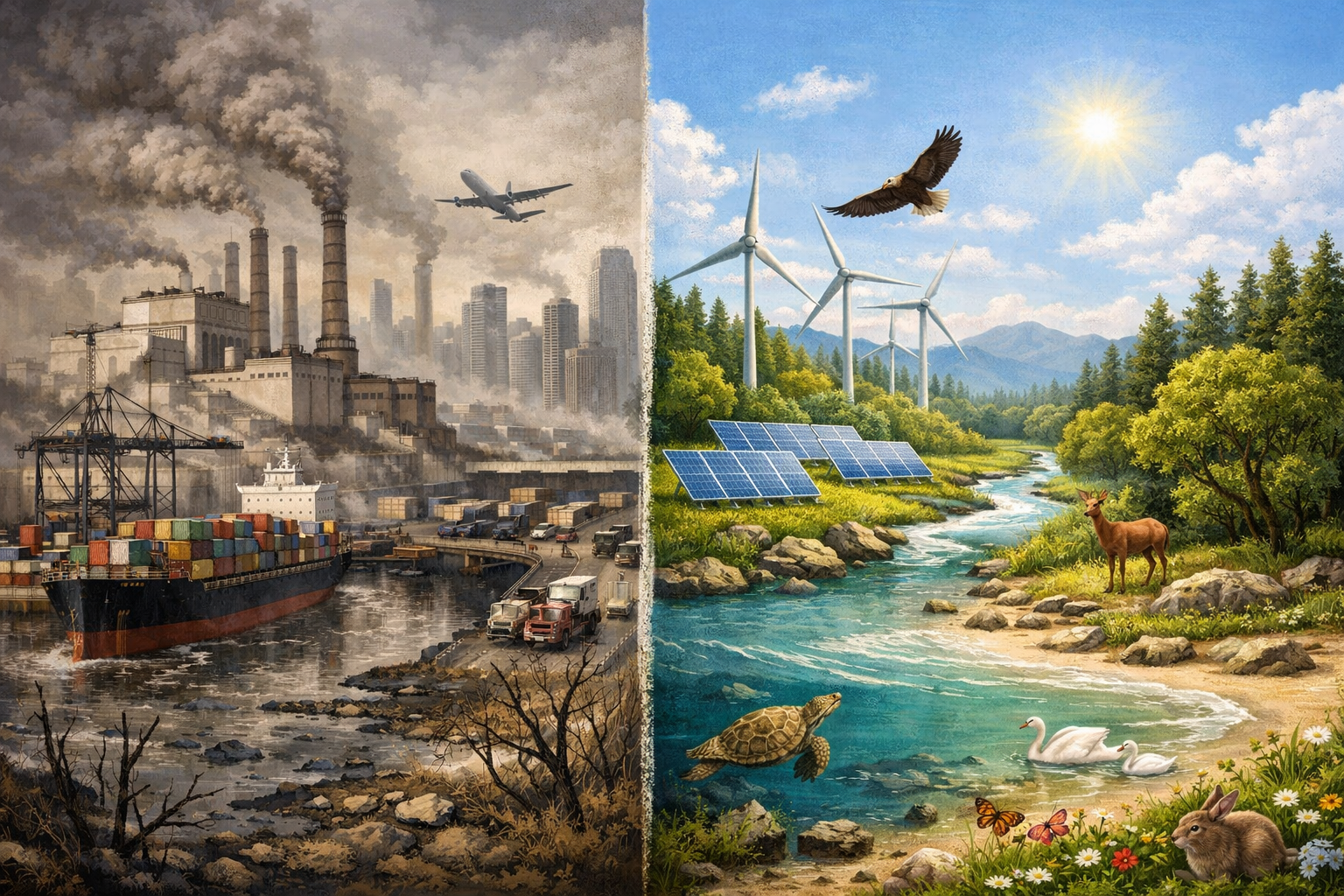
Globalisation has changed the modern world by linking economies, cultures, technologies, and countries in ways that have never happened before. Countries now rely on each other for goods, services, and resources because of trade, communication, and industrial growth. Globalisation has led to economic growth and development, but it has also raised serious concerns about the environment.
In today’s world, it’s important to know how globalisation affects the environment. The global economy closely links problems such as climate change, pollution, deforestation, and resource depletion. This article goes into great detail about the effects of globalisation on the environment, its pros and cons, and possible ways to make the future more sustainable.
Getting a Handle on Globalisation
Globalisation is the process by which countries become more connected to each other. International trade, foreign investment, technology transfer, migration, and the sharing of ideas and cultures all help to make this connection.
Businesses can now work across borders, supply chains can go from one continent to another, and consumers can get goods from almost anywhere in the world. This system makes the economy work better, but it also puts more stress on the environment because it makes more, moves more, and uses more.
How globalisation and the environment are connected
The relationship between globalisation and the environment is complicated. Globalisation encourages new ideas, cleaner technologies, and people who care about the environment. On the other hand, it speeds up industrial activity, resource extraction, and the production of waste.
Many experts agree that globalisation has a direct effect on the environment by making industries grow, using more energy, and using more land. These activities can hurt ecosystems and make it hard for the environment to stay healthy in the long run if there aren’t enough rules in place.
Good things that globalisation does for the environment
1. The growth of green technology
One of the best things about globalisation is that it lets people around the world share technologies that are good for the environment. International cooperation makes it easier for renewable energy systems like solar panels, wind turbines, and energy-efficient machines to spread.
Developing countries can use cleaner technologies from more developed countries to cut down on pollution and make the environment better.
2. Working together on environmental issues around the world
Globalisation makes it easier for countries to work together to protect the environment. International agreements, like the Paris Climate Agreement and global conservation programs, are possible because countries work together.
Working together like this helps share scientific knowledge, set environmental standards, and deal with global environmental threats.
3. More awareness of the environment
The media and communication around the world have made people more aware of environmental issues. People all over the world now know how important it is to protect wildlife, forests, and oceans.
Environmental movements are getting support from people all over the world, which is making businesses and governments use more environmentally friendly methods.
The bad effects of globalisation on the environment
1. Changes in the weather and carbon emissions
Transportation like ships, planes, and trucks is very important for trade around the world. These systems use fossil fuels and let greenhouse gases into the air.
Carbon emissions go up as trade between countries grows. This situation makes it clear how globalisation affects the environment by speeding up climate change and making the weather less stable.
2. Pollution from factories
A lot of businesses move their production to countries with less strict environmental laws. This behaviour causes pollution in the air, water, and soil.
Factories put dangerous chemicals into the air and rivers, which harms both people and living things.
3. Cutting down trees and losing habitats
Large-scale deforestation is caused by the high demand for timber, agricultural products, and raw materials around the world. People cut down trees to make room for farming, mining, and building factories.
Cutting down trees destroys habitats for animals and makes it harder for the planet to soak up carbon dioxide.
4. Using too many natural resources
Globalisation makes people buy more things. Natural resources like water, minerals, and fossil fuels are being taken out of the ground faster than they can be replaced.
This kind of extraction that isn’t sustainable leads to a lack of resources and an imbalance in the environment.
The environment is getting worse because of global trade
A big reason for globalisation is international trade. It helps the economy grow, but it also makes things worse for the environment.
It can take products thousands of kilometres to get to customers. Transportation over long distances uses more fuel and pollutes more. Shipping goods around the world also makes more packaging waste.
In developing areas, economies that focus on trade may put making money ahead of protecting the environment.
How globalisation affects biodiversity
Another big problem that comes from globalisation is the loss of biodiversity. Pollution harms plants and animals, and industries that grow too big destroy natural habitats.
Invasive species are a threat to native species because they spread through global transportation networks. Weak international enforcement in some areas makes wildlife trafficking worse.
To protect biodiversity, countries all over the world need to work together and have strong environmental laws.
Globalisation and the Creation of Waste
Globalisation has made consumer culture grow very quickly. A lot of trash is made by fast fashion, electronics, and packaged goods.
A lot of developed countries send their trash to developing countries, where the systems for getting rid of it aren’t good enough. This activity pollutes land and water and hurts the people who live nearby.
This is another way that globalisation can hurt the environment when waste management is not taken care of.
Globalisation and Environmental Inequality
Damage to the environment is not spread out evenly. Even though they pollute less than other countries, developing countries often have the worst environmental problems.
Businesses move to places with low wages and weak environmental laws, which puts pollution on people who are already vulnerable.
Environmental justice is a key part of solving environmental problems caused by globalisation.
What Corporations Do to Affect the Environment
Multinational corporations have a big impact on globalisation. Their choices about what to make have an effect on the environment around the world.
Some businesses put money into sustainability and cut down on pollution. Some people care more about making money than protecting the environment.
To protect the environment, businesses need to be responsible, open, and honest.
Policies made by the government and protecting the environment
Good environmental policies can help lessen the bad effects of globalisation. Governments need to make sure that pollution controls are followed, natural resources are protected, and renewable energy is used more.
To make sure that environmental rules aren’t broken in the name of economic growth, countries need to work together.
Policies that are well-balanced help make sure that economic growth and environmental protection go hand in hand.
A way forward is through sustainable globalisation
Sustainable globalisation is about making the world economy grow while also protecting the environment. This way of doing things includes using clean energy, being responsible with what you buy, and making things in a way that doesn’t harm the environment.
Everyone has a part to play, including businesses, governments, and people. Using sustainable methods can help the environment by cutting down on pollution, saving resources, and protecting ecosystems.
Globalisation can help the economy and the environment if it is managed well.
How technology can help the environment
New technology can help solve environmental problems. Digital tools help people use less paper, smart systems help people use less energy, and green technologies help people use less energy.
Sharing new ideas around the world speeds up progress on the environment and helps sustainable development around the world.
Learning and Being Aware of the Environment
Education is important for fixing problems with the environment. People who know about environmental issues make better decisions as consumers and citizens.
Global education programs help people live in a way that is good for the environment and encourage them to act responsibly no matter where they are.
A Balanced View of How Globalisation Affects the Environment
It is important to look at globalisation in an unbiased way. Globalisation has negative effects on the environment, but it also gives us tools to fix environmental problems.
How societies handle global economic systems will determine the outcome. Making responsible choices can make globalisation a good thing for the environment.
The Future of Globalisation and the Environment
The choices we make today will affect the future. We need to act quickly on climate change, pollution, and the loss of biodiversity.
Countries need to find a balance between protecting the environment and growing their economies. A greener future for the world will come from new ideas, working together, and being responsible.
Questions That Are Commonly Asked (FAQs)
1. What effect does globalisation have on the environment?
Globalisation makes industries work harder, trade more, and use more resources, which can cause pollution, climate change, and the loss of habitats.
2. Is globalisation good for the environment?
Yes, globalisation helps spread green technology, raise awareness of environmental issues, and encourage people from different countries to work together to protect the environment.
3. What are the biggest environmental problems that globalisation has caused?
Climate change, pollution, deforestation, waste production, and loss of biodiversity are some of the biggest problems.
4. What can governments do to lessen the damage that globalisation does to the environment?
Governments can work together with other countries, promote renewable energy, and make strict environmental laws.
5. Is it possible to have globalisation that lasts?
Yes, responsible production, clean energy, and fair global trade practices can make globalisation last.
Final Thoughts
Globalisation has changed the world we live in today, giving us both new chances and new problems. There is no doubt that it has a big effect on the environment. Economic growth and technological advancement provide advantages; however, environmental degradation persists as a significant issue.
Societies can make smart decisions when they know how globalisation affects the environment. It is possible to lessen damage to the environment and create a balanced future through sustainable practices, strong policies, and cooperation between countries.
A responsible approach to globalisation can help the world grow while also protecting the planet for future generations.