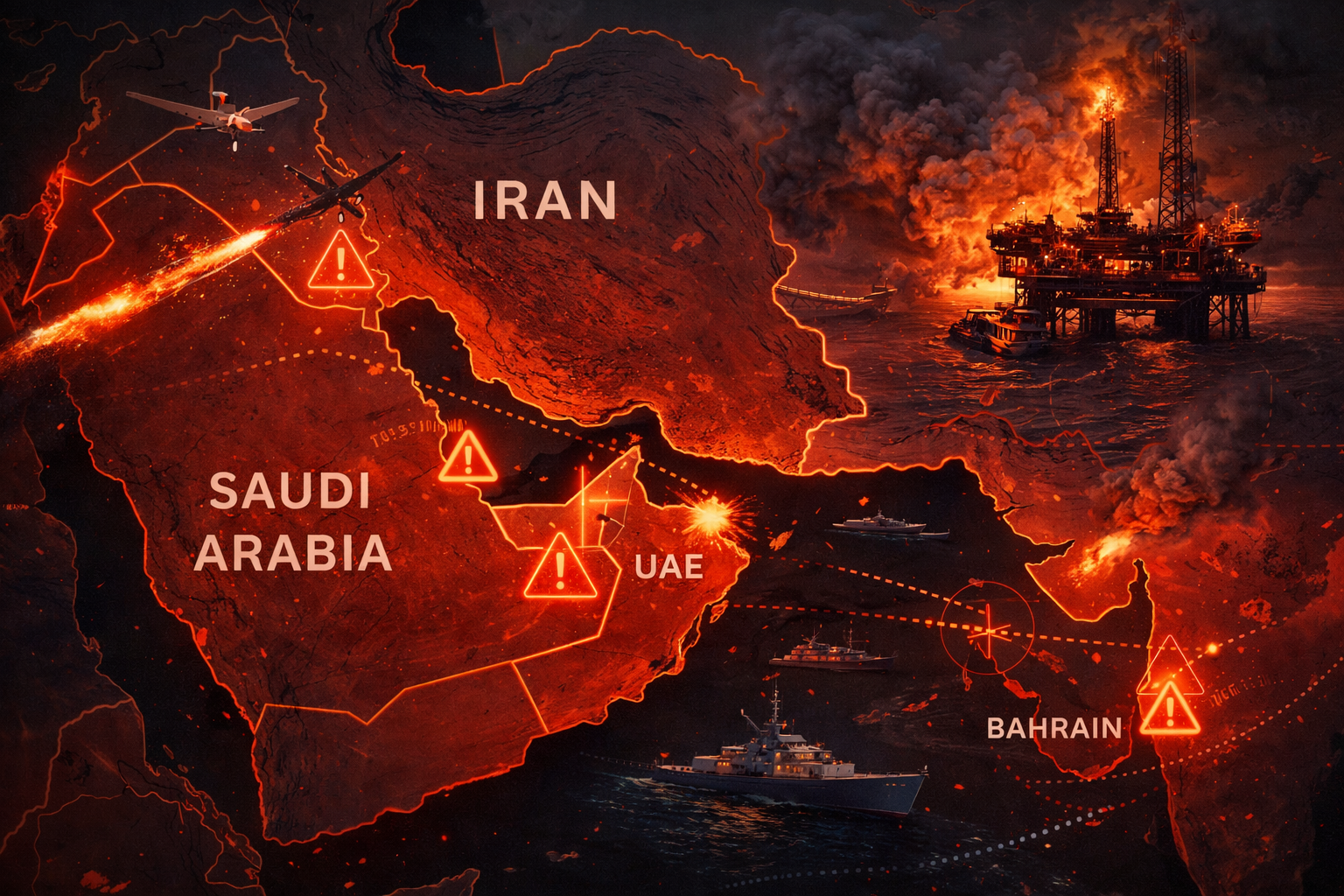
Global politics, trade, and energy supply have always revolved around the Persian Gulf. Iranian attacks on Gulf states have grown to be a significant concern for both regional and global stakeholders in recent decades. These attacks can take many different forms, such as cyber operations, proxy conflicts, drone and missile attacks, and direct military strikes. Examining the methods, strategic motivations, historical background, and long-term ramifications is necessary to comprehend these incidents. For policymakers, companies, and readers looking for in-depth information, this article offers a comprehensive, educational summary.
Iran-Gulf Relations in Historical Context
Centuries of rivalries and cultural, political, and religious ties have shaped Iran’s relationship with the Gulf states. Following the Islamic Revolution in 1979, when Iran’s new leadership adopted an assertive regional strategy, the current tension started to escalate. As Gulf nations like Saudi Arabia and Kuwait provided Iraq with financial and military support during the Iran-Iraq War in the 1980s, tensions were further heightened. Iranian attacks on Gulf states are still influenced by the patterns that were established by Iran’s use of proxy groups in nations like Yemen, Bahrain, and Iraq.
Iranian Attacks’ Geopolitical Reasons
Attacks are motivated by a number of factors, including the desire for strategic dominance in the Gulf, obtaining political clout in regional conflicts, influencing economic flows like the oil trade, and demonstrating sectarian influence by aiding Shia communities. These assaults are frequently planned to minimise direct conflict while applying pressure to Gulf states and their allies. Iran can effectively project power and influence regional negotiations by focusing on military installations, shipping lanes, and critical infrastructure.
Iranian Attack Types on Gulf States
Iran’s attacks combine conventional, unconventional, and cyber tactics.
Drone and Missile Attacks
Iran-backed organisations, like the Houthis in Yemen, frequently attack Saudi oil facilities and other vital infrastructure with drones and missiles. These attacks can show off Iran’s military might, cause economic losses, and momentarily stop production.
Attacks at Sea
Shipping and international trade are disrupted by attacks on tankers and commercial vessels in Gulf waters. These measures raise concerns about the safety of important maritime routes and drive up shipping costs.
Cyberattacks
Iran has increased its use of cyberwarfare, focusing on Gulf countries’ infrastructure, government organisations, and energy firms. Cyberattacks have the potential to increase economic instability, interfere with operations, and compromise sensitive data.
Engagements through Proxy
Iran regularly employs militias and proxy organisations to launch covert attacks. This tactic preserves regional influence while lowering the likelihood of direct conflict.
Current, Notable Events
- A number of incidents during the past ten years demonstrate the continuous threat posed by Iranian actions:
- Production is momentarily disrupted by missile strikes on Saudi oil infrastructure, such as refineries and pipelines.
- Concerns regarding economic and civilian security are raised by drone attacks on UAE airports and oil facilities.
- cross-border conflicts in Kuwait and Iraq, indicating Iran’s readiness to take on Gulf military forces.
- Energy companies are the target of cyberattacks that disrupt their operations and finances.
These incidents show how Iranian attacks on Gulf states are multifaceted and have a long-lasting effect on regional stability.
Effects on Security in the Region
The attacks have a significant impact on Gulf security. Gulf states are forced to invest in cutting-edge defence technologies, fortify their ties with Western nations, and increase military preparedness. A climate of uncertainty is also created by the ongoing threat, which affects military planning and resource allocation. While Iran’s actions promote cooperation among Gulf nations, they also increase mistrust and raise the possibility of an escalation.
Trade and Economic Repercussions
These attacks have serious economic repercussions. Because oil prices fluctuate in response to instability, disruptions in oil production have an impact on both local economies and global markets. Disruptions to shipping lanes slow international trade and raise insurance costs. Because frequent attacks are seen as a threat to regional stability, investor confidence is impacted. The financial strain on Gulf governments is further increased by the price of implementing security measures and protecting vital infrastructure.
International and Diplomatic Reactions
Depending on strategic interests, global responses differ. The UN frequently urges moderation and respect for international law. Sanctions have been imposed on Iran by Western countries, especially the US and the EU, in an effort to stop its aggressive behaviour. China and Russia, two other major world powers, stress communication and warn against escalation. Iran’s strategic calculations and the dynamics of regional security are impacted by these international reactions.
Strategies for Regional Security
Gulf nations have created all-encompassing plans to combat Iranian dangers. The goal of investments in cyber defence capabilities, sophisticated radar networks, and missile defence systems is to safeguard vital infrastructure. Technical assistance, training, and intelligence sharing are provided through strategic alliances with Western allies. In order to resolve political tensions and lessen the possibility of escalation, Gulf nations also seek diplomatic avenues.
Protection of Infrastructure and Energy Security
Iranian attacks on Gulf states primarily target energy infrastructure. For both domestic economies and international energy markets, oil refineries, pipelines, and shipping routes must be protected. In order to reduce risks, Gulf nations are implementing multi-layered strategies that incorporate cybersecurity, surveillance, and physical security. To secure essential energy resources, long-term resilience necessitates both regional collaboration and technological investment.
The Function of Global Partnerships
In order to prevent Iranian aggression, alliances with superpowers are essential. In order to provide strategic deterrence and intelligence support, the United States keeps a military presence in the Gulf. While other international actors offer financial or logistical support, European nations participate through diplomacy and sanctions. These partnerships influence Iran’s assessments of the effects of attacks in addition to improving defence capabilities.
Possible Future Situations
A combination of regional cooperation, military deterrence, and diplomacy will determine the future course of Gulf-Iran relations. Intermittent attacks are likely to persist if the underlying political and sectarian conflicts are not addressed. Global energy markets and regional stability will remain sensitive to any escalation, even though risks could be decreased by strengthened defence systems, proactive intelligence operations, and diplomatic engagement. Analysts stress that Gulf states and other international stakeholders must be ready for a variety of scenarios.
FAQs
Q1: What motivates Iran to attack Gulf nations?
Iran frequently strikes a balance between military action and political and economic goals in order to support Shia communities, assert regional dominance, influence political negotiations, and safeguard strategic interests.
Q2: Which Gulf nations are most frequently attacked?
Because of their proximity, energy infrastructure, and strategic importance in the Gulf, Saudi Arabia, the United Arab Emirates, and Bahrain are among the countries most impacted.
Q3: What impact do Iranian attacks have on the world’s energy markets?
Attacks impede the transportation and production of oil, which raises prices, creates supply uncertainty, and has an impact on the world economy.
Q4: How are the Gulf states preventing attacks?
Gulf nations work with international allies, invest in cybersecurity, deploy cutting-edge missile and radar systems, and coordinate regional security.
Q5: Is it possible to stop future attacks through diplomacy?
While diplomacy is important, long-term stability also necessitates infrastructure protection, military deterrence, and regional cooperation to resolve underlying political tensions.
Q6: Do these attacks heavily rely on proxy groups?
Indeed, Iran frequently employs proxy organisations, such as the Houthis in Yemen, to carry out attacks covertly, lowering the likelihood of direct conflict while increasing its power.
Q7: What role do cyberattacks play in the plan?
Cyberattacks are an unconventional but effective part of Iran’s strategy because they disrupt vital infrastructure, leak private information, and increase economic instability.
In conclusion
With ramifications for politics, the economy, and security, Iranian attacks on Gulf states continue to be a serious problem. These assaults show how regional influence, energy security, and military strategy are intertwined. It is evident that Gulf nations and international stakeholders need to remain vigilant by looking at historical context, motivations, strategies, and outcomes. To reduce risks, resilience planning, diplomatic engagement, strategic alliances, and strengthened security are crucial. Governments, corporations, and international observers must all comprehend these attacks because the Persian Gulf remains a key location for the world’s energy supply and regional stability.