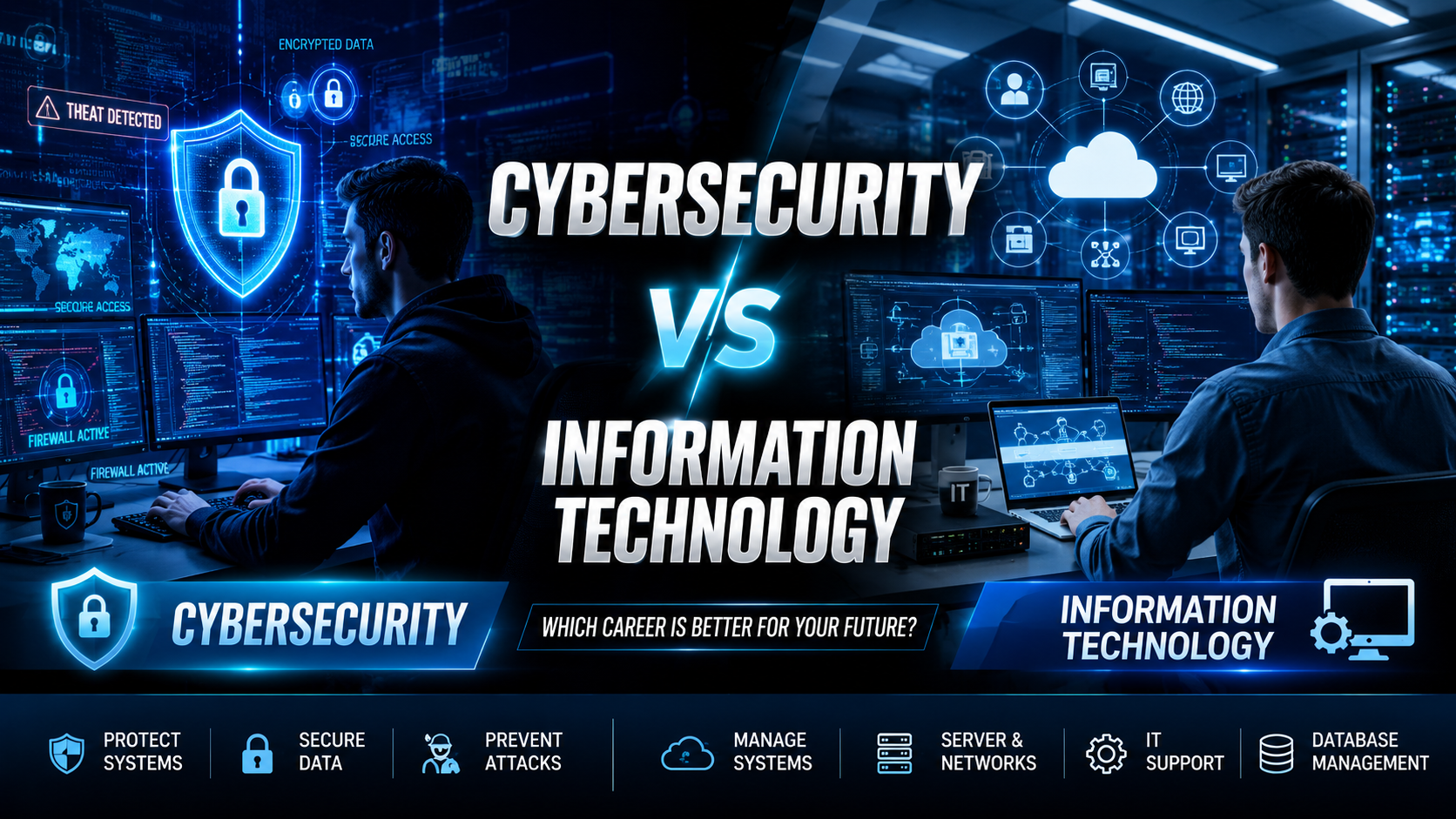
Technology has changed the world very fast. Every business, company, school, hospital, and even government department now depends on digital systems. Because of this growth, students and professionals often ask one important question: cybersecurity or information technology — which field is better?
Both careers offer strong future opportunities, high salaries, and global demand. However, they are not the same. Information Technology focuses on managing systems, networks, hardware, and software. Cybersecurity focuses on protecting those systems from hackers, cyber attacks, and data theft.
Choosing the right field can shape your career and future success. Some people enjoy solving technical problems and managing computer systems. Others enjoy security challenges and protecting networks from online threats. That is why understanding the difference between these two fields is very important before making a career decision.
In this complete guide, you will learn everything about cybersecurity or information technology. We will compare salary, skills, career growth, job opportunities, education, future demand, and work responsibilities. This article will help students, beginners, and professionals choose the best career path according to their interests and goals.
Understanding Information Technology
Information Technology, also known as IT, is a broad field that focuses on using technology to manage information and business operations. IT professionals work with computers, software, servers, databases, cloud systems, and networks. Their main goal is to ensure systems work smoothly and efficiently.
Companies need IT experts to maintain systems, solve technical issues, install software, manage databases, and improve network performance. Without IT professionals, businesses would struggle to operate daily tasks.
IT includes many areas such as network administration, software support, cloud computing, data management, web development, and system analysis. Because of its wide scope, Information Technology offers many career opportunities for beginners and experienced professionals.
People who choose IT often enjoy problem-solving, system management, and technical support. They usually work in offices, software companies, banks, hospitals, schools, and multinational organizations.
The field continues to grow because businesses rely heavily on digital systems and online operations. This makes Information Technology one of the most stable and flexible career options in today’s digital world.
Understanding Cybersecurity
Cybersecurity is a specialized branch of technology that focuses on protecting systems, networks, software, and data from cyber threats. As online attacks continue to increase worldwide, companies now invest heavily in cybersecurity solutions and professionals.
Cybersecurity experts protect organizations from hackers, malware, phishing attacks, ransomware, and data breaches. Their work helps businesses keep sensitive information safe and secure.
This field includes ethical hacking, network security, digital forensics, penetration testing, cloud security, risk management, and security analysis. Cybersecurity professionals constantly monitor systems and identify weaknesses before attackers can exploit them.
Many people choose cybersecurity because it offers exciting challenges and strong career growth. Every day brings new security threats, which means professionals must stay updated with the latest technologies and attack methods.
When comparing cybersecurity or information technology, cybersecurity often attracts people who enjoy investigation, problem-solving, and online security challenges. It is one of the fastest-growing industries globally because cybercrime continues to rise every year.
Main Difference Between Cybersecurity and Information Technology
The biggest difference between cybersecurity and Information Technology is their primary focus. IT professionals manage and maintain technology systems, while cybersecurity professionals protect those systems from threats.
Information Technology supports the daily operation of computer systems, software, servers, and networks. IT teams ensure systems run smoothly and efficiently for businesses and users.
Cybersecurity focuses on security and protection. Professionals in this field detect threats, prevent attacks, secure networks, and protect confidential data.
Although cybersecurity is part of the larger IT industry, it requires specialized knowledge and security-focused skills. Many cybersecurity experts actually begin their careers in IT before moving into security roles.
Understanding this difference is important when deciding between cybersecurity or information technology because both fields require different interests, skills, and career goals.
Career Opportunities in Information Technology
Information Technology offers many career opportunities across different industries. Businesses need IT professionals to manage systems, support employees, and maintain digital operations.
Popular IT careers include system administrator, network engineer, IT support specialist, database administrator, cloud engineer, software developer, and IT manager. These roles exist in almost every industry because all organizations use technology today.
IT careers also offer flexibility. Professionals can work in healthcare, finance, education, retail, government, and technology companies. Remote work opportunities are also increasing in the IT sector.
Many students prefer IT because it provides a broad career path. They can explore different areas before choosing a specialization. This flexibility makes Information Technology attractive for beginners entering the tech industry.
The demand for IT professionals continues to rise as companies adopt cloud computing, artificial intelligence, and digital transformation strategies. This growth creates stable and long-term job opportunities for skilled professionals.
Career Opportunities in Cybersecurity
Cybersecurity also offers excellent career opportunities with strong salary potential and global demand. Organizations now prioritize digital security because cyber attacks can cause financial loss, legal problems, and reputation damage.
Popular cybersecurity careers include security analyst, ethical hacker, penetration tester, security engineer, incident responder, cybersecurity consultant, and security architect. Government agencies, banks, healthcare organizations, and tech companies actively hire cybersecurity experts.
The field is growing rapidly because cyber threats continue to evolve. Businesses need professionals who can identify risks, protect systems, and respond to attacks quickly.
Cybersecurity careers often offer high salaries because companies understand the importance of security protection. Skilled professionals with certifications and experience can access senior-level positions and leadership roles.
When deciding between cybersecurity or information technology, many people choose cybersecurity because of its exciting work environment, advanced challenges, and high earning potential.
Salary Comparison Between Cybersecurity and IT
Salary is one of the biggest factors people consider when choosing a career. Both Information Technology and cybersecurity offer competitive salaries, but cybersecurity roles often pay slightly higher due to specialized skills and growing demand.
Entry-level IT professionals usually start with moderate salaries and gain higher income as they gain experience. Roles such as cloud engineers, software developers, and IT managers can earn excellent salaries over time.
Cybersecurity professionals often receive higher starting salaries because companies urgently need security experts. Ethical hackers, security analysts, and penetration testers can earn impressive salaries even in early career stages.
However, salary depends on experience, certifications, location, company size, and technical skills. Professionals who continue learning and upgrading their expertise often achieve the highest income in both industries.
Overall, both fields provide strong financial opportunities and career stability for long-term growth.
Skills Required for Information Technology
Information Technology requires strong technical and communication skills. IT professionals work with systems, networks, software, and users daily.
Important IT skills include troubleshooting, network management, cloud computing, operating systems, database management, and technical support. Communication skills are also important because IT professionals often help users solve technical problems.
People who succeed in IT usually enjoy working with technology and solving practical issues. They stay updated with new software, tools, and system technologies.
IT professionals also need patience and adaptability because technology changes very quickly. Learning new systems and tools becomes part of daily work life.
Skills Required for Cybersecurity
Cybersecurity requires analytical thinking, technical knowledge, and strong problem-solving abilities. Professionals in this field protect systems from advanced online threats and attacks.
Important cybersecurity skills include network security, ethical hacking, penetration testing, malware analysis, risk assessment, and security monitoring. Knowledge of programming and scripting can also be helpful.
Cybersecurity experts must think like attackers to identify weaknesses and improve protection systems. They constantly analyze threats and develop strategies to secure digital environments.
Continuous learning is extremely important in cybersecurity because cyber threats evolve every day. Professionals often earn certifications and attend training programs to stay updated.
People who enjoy challenges, investigations, and online security often succeed in cybersecurity careers.
Education Requirements for IT and Cybersecurity
Both Information Technology and cybersecurity require technical education, but the learning path may differ slightly.
Most IT professionals complete degrees in Information Technology, Computer Science, or Software Engineering. Many also gain certifications in networking, cloud computing, and system administration.
Cybersecurity professionals may study Cybersecurity, Computer Science, or Information Technology before specializing in security-focused areas. Certifications such as CEH, CISSP, Security+, and CompTIA Cybersecurity Analyst are highly valuable.
Practical experience is important in both fields. Employers often prefer candidates with internships, projects, and hands-on skills.
Online courses and certifications also help beginners enter the technology industry faster. Many professionals continue learning throughout their careers to remain competitive.
Future Demand of Cybersecurity and Information Technology
Technology continues to expand globally, which increases demand for both IT and cybersecurity professionals. Businesses now depend on digital systems more than ever before.
Information Technology remains essential because companies need support for networks, cloud systems, databases, and software operations. The rise of artificial intelligence and cloud computing also creates new IT opportunities.
Cybersecurity demand is growing even faster because cybercrime increases every year. Organizations invest heavily in security systems to protect customer data and digital assets.
Experts predict millions of cybersecurity jobs will remain unfilled worldwide due to the shortage of skilled professionals. This makes cybersecurity one of the most promising careers for the future.
If you are deciding between cybersecurity or information technology, both fields offer excellent future growth and job stability.
Which Field Is Easier to Learn?
Many beginners ask whether cybersecurity or Information Technology is easier to learn. The answer depends on personal interests and technical background.
Information Technology is often considered easier for beginners because it covers broad technical concepts and system management. Many entry-level IT jobs also focus on support and troubleshooting tasks.
Cybersecurity can be more challenging because it requires deeper knowledge of networks, security systems, threats, and attack methods. Professionals must understand both technology and security concepts.
However, passion and consistency matter more than difficulty level. People who enjoy security challenges often find cybersecurity exciting and rewarding.
Choosing the right field becomes easier when you understand your interests, goals, and preferred work style.
Which Career Is Better for Beginners?
For beginners, Information Technology often provides a smoother entry into the technology industry. IT offers many beginner-friendly roles such as help desk support, technical support, and junior system administration.
These roles help professionals build technical foundations and practical experience. After gaining experience, many professionals move into advanced IT or cybersecurity roles.
Cybersecurity may require more specialized skills at the beginning, but entry-level security positions are also growing rapidly. Some beginners directly enter cybersecurity through certifications, internships, and security-focused training.
The best choice depends on your interests. If you enjoy managing systems and solving technical issues, IT may suit you better. If you enjoy security, investigations, and online protection, cybersecurity could be the right path.
Work Environment and Job Pressure
Both fields can involve pressure and responsibility, especially when systems fail or security threats occur.
IT professionals often handle technical issues, system downtime, software problems, and user support requests. Their work focuses on keeping systems operational.
Cybersecurity professionals face security risks, cyber attacks, and emergency incident responses. They may work under pressure during active security threats.
Despite these challenges, both careers offer rewarding experiences and strong professional growth. Many professionals enjoy the dynamic and fast-changing nature of the technology industry.
Why Businesses Need Both IT and Cybersecurity
Modern businesses cannot operate successfully without IT and cybersecurity teams. IT professionals build and maintain systems, while cybersecurity experts protect them from attacks.
Companies need strong networks, cloud systems, software solutions, and secure databases. At the same time, they must protect customer data, financial records, and confidential information.
Here are some important reasons businesses need both fields:
- Businesses rely on IT for daily operations, communication, and technology management while cybersecurity protects systems from hackers, malware, and data breaches that can damage business reputation and financial stability.
Organizations that invest in both IT and cybersecurity often achieve better productivity, stronger security, and improved customer trust.
FAQs
Is cybersecurity better than Information Technology?
Cybersecurity is better for people who enjoy security and digital protection, while Information Technology is better for those interested in system management and technical operations. Both fields offer excellent career opportunities.
Which field has higher salary potential?
Cybersecurity often offers slightly higher salaries because of specialized security skills and high market demand. However, experienced IT professionals can also earn excellent income.
Can I switch from IT to cybersecurity later?
Yes, many professionals start in Information Technology and later move into cybersecurity after gaining technical experience and security certifications.
Is cybersecurity difficult for beginners?
Cybersecurity can be challenging because it requires security-focused knowledge and analytical thinking. However, with proper learning and practice, beginners can succeed.
Which career has better future demand?
Both careers have strong future demand, but cybersecurity is growing faster due to increasing cyber threats and global security concerns.
Do I need a degree for IT or cybersecurity?
A degree is helpful, but certifications, practical skills, and experience can also help you build a successful career in both fields.
Which field is better for remote work?
Both IT and cybersecurity offer remote work opportunities, especially in cloud computing, technical support, security analysis, and system administration.
Is coding necessary for cybersecurity?
Basic programming knowledge is useful in cybersecurity, but not all security roles require advanced coding skills.
Final Verdict: Cybersecurity or Information Technology
The debate between cybersecurity or information technology depends on your career goals, interests, and strengths. Both fields offer excellent salaries, strong future demand, and global career opportunities.
Information Technology is ideal for people who enjoy system management, technical support, cloud computing, and broad technology operations. It offers flexibility and many career paths across industries.
Cybersecurity is perfect for individuals who enjoy digital protection, online security, ethical hacking, and advanced problem-solving. It offers exciting challenges and rapidly growing demand worldwide.
If you want a broad technology career with multiple options, Information Technology may be the best choice. If you prefer security-focused work with advanced technical challenges, cybersecurity could be the better path.
No matter which field you choose, continuous learning, certifications, and practical experience will help you succeed in the technology industry.