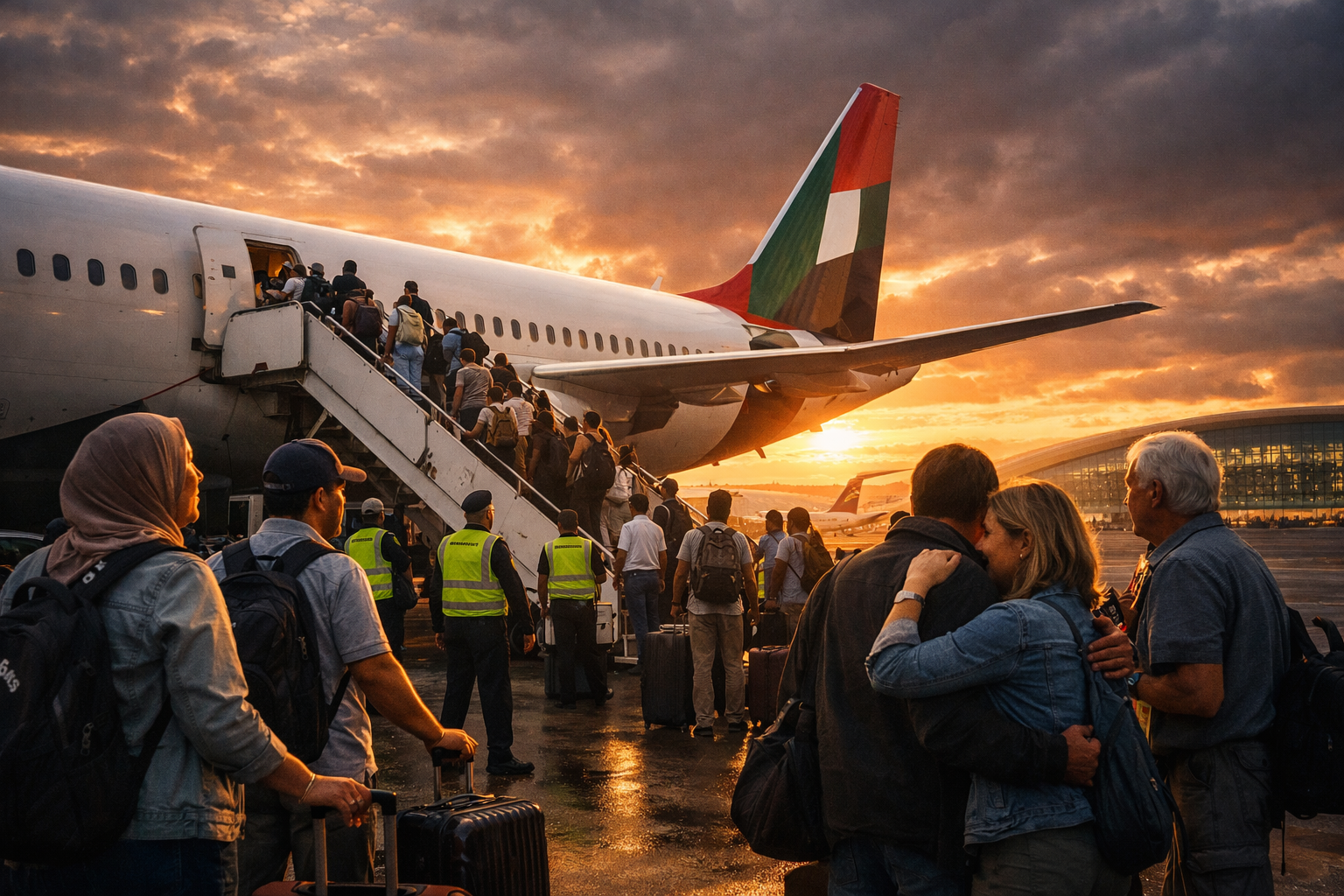
The global travel sector faced sudden disruption after rising geopolitical tensions in the Middle East led to widespread flight cancellations and airspace restrictions. Following military developments involving Iran, several countries introduced precautionary airspace controls. As a result, thousands of international visitors in the United Arab Emirates were unable to return home as scheduled.
In a major breakthrough, First stranded tourists leave UAE on repatriation flights after Iran attacks, marking the beginning of a carefully coordinated evacuation effort. This development represents a critical step toward restoring stability in regional travel operations and reassuring global travelers.
Background of the Regional Crisis
Rising Geopolitical Tensions
The situation escalated rapidly after security developments connected to Iran raised concerns across the Gulf region. Governments moved quickly to protect civilians and infrastructure. Airspace monitoring intensified, and precautionary measures were introduced within hours.
Immediate Impact on Aviation
Commercial aviation depends on predictable and secure flight corridors. When tensions rise, airlines must reassess routes to ensure passenger safety. In this case, several carriers suspended operations temporarily or redirected aircraft away from potentially sensitive zones. These changes created a chain reaction of delays and cancellations.
Disruption to Travel Plans
Tourists visiting the UAE for holidays, business trips, exhibitions, and family visits suddenly found themselves stranded. Hotel stays extended beyond planned dates, and airport terminals saw an increase in passengers seeking updated travel information.
Why Tourists Were Stranded in the UAE
Airspace Restrictions and Route Changes
Airlines require regulatory clearance for every route they operate. When certain airspaces become restricted, alternative paths must be calculated. These changes increase travel time and operational costs. Some flights were postponed until safety approvals were finalized.
Safety-First Approach by Airlines
Airlines adopted a cautious strategy. Even if certain routes remained technically open, many carriers waited for updated security assessments before resuming full operations. Passenger safety remained the top priority throughout the disruption.
High Volume of Transit Passengers
The UAE serves as one of the busiest transit hubs in the world. Millions of passengers connect through its airports each year. Even a short-term suspension can affect thousands of onward journeys within a single day.
Emergency Response by UAE Authorities
Rapid Coordination Between Agencies
Authorities in the UAE activated emergency response systems immediately. Aviation regulators, airport management, security forces, and tourism departments began coordinated planning sessions.
Embassy Involvement and Registration Systems
Foreign embassies established emergency communication channels for their citizens. Travelers were advised to register online or contact hotline numbers. This data helped officials estimate the number of people requiring evacuation.
Clear Public Communication
Officials provided consistent updates through verified platforms. Accurate communication prevented panic and reduced the spread of misinformation. Transparency strengthened public confidence during uncertain hours.
Planning the Repatriation Flights
Identification of Priority Passengers
Authorities first prioritized vulnerable individuals. Elderly travelers, families with young children, and passengers with medical needs received early placement on evacuation lists.
Securing Alternative Flight Routes
Since certain corridors were restricted, aviation experts mapped new routes. These routes required additional fuel planning and technical adjustments. Safety clearances were obtained before approval.
Airport Preparations for Special Flights
Airports created designated counters for repatriation flights. Staff guided passengers through documentation checks efficiently. Security screening remained thorough yet organized.
Soon after these steps were finalized, confirmation arrived that First stranded tourists leave UAE on repatriation flights after Iran attacks, offering relief to families around the world.
The First Repatriation Departures
Emotional Scenes at Departure Gates
The departure of the first flights was marked by visible relief. Many travelers expressed gratitude toward airline crews and government officials. Families contacted loved ones immediately after boarding confirmation.
Diplomatic Oversight During Boarding
Embassy representatives remained present at airport terminals to assist passengers. They ensured documentation compliance and addressed last-minute concerns.
Symbol of Crisis Management Success
The moment when First stranded tourists leave UAE on repatriation flights after Iran attacks became a symbol of effective crisis response and international cooperation.
Impact on the UAE Tourism Industry
Short-Term Economic Effects
Hotels reported extended occupancy due to stranded visitors. While this increased room bookings temporarily, inbound tourism slowed. Tour operators experienced cancellations and rescheduling requests.
Confidence in Long-Term Recovery
The UAE has historically demonstrated strong recovery after global disruptions. Its diversified economy and advanced infrastructure support rapid normalization once tensions ease.
Protecting the Country’s Global Image
Tourism authorities emphasized safety and operational transparency. By organizing evacuation flights efficiently, the UAE reinforced its reputation as a secure travel destination.
Airline Industry Adaptation
Operational Adjustments
Airlines modified schedules, increased fuel capacity for longer routes, and coordinated with international regulators. Flight crews received updated route briefings to ensure compliance.
Customer Support Expansion
Customer service departments expanded call center operations. Digital platforms provided real-time notifications regarding schedule changes.
Financial Considerations
Repatriation flights require logistical investment. However, maintaining customer trust is more valuable in the long term. The successful departures demonstrate airline resilience during geopolitical crises.
Security Measures at Airports
Enhanced Monitoring Systems
Airport security teams increased patrols and surveillance to maintain order. Passenger flow management ensured smooth check-in procedures.
Baggage Screening and Safety Protocols
Advanced screening systems operated continuously. Authorities ensured compliance with international aviation safety standards.
Controlled Boarding Processes
Special boarding announcements minimized crowd congestion. Clear signage helped guide passengers to correct departure gates.
Broader Economic Implications
Impact on Oil and Trade Markets
Regional instability can influence global oil prices and shipping routes. Financial markets often react quickly to geopolitical developments.
Aviation Insurance and Risk Assessment
Insurance providers evaluate risk exposure during crises. Airlines coordinate closely with insurers before resuming full-scale operations.
Investor Confidence
The ability to manage evacuations efficiently supports economic stability. The news that First stranded tourists leave UAE on repatriation flights after Iran attacks sends a reassuring message to investors.
Role of International Cooperation
Diplomatic Dialogue
Countries maintained open diplomatic channels to prevent further escalation. Cooperation ensured that evacuation flights received necessary airspace permissions.
Aviation Authority Collaboration
Civil aviation authorities from multiple nations coordinated flight approvals and technical clearances.
Shared Commitment to Civilian Safety
Despite political tensions, the protection of civilian travelers remained a shared priority among governments.
Lessons for Global Travelers
Importance of Travel Insurance
Comprehensive insurance coverage can protect travelers during unexpected disruptions. Coverage often includes accommodation extensions and flight changes.
Monitoring Official Advisories
Travelers should rely only on official government advisories and airline notifications for accurate updates.
Flexible Booking Preferences
Flexible tickets and refundable bookings offer greater security during uncertain times.
Future Outlook for Regional Travel
Gradual Restoration of Flight Schedules
As airspace assessments continue, airlines are expected to restore regular frequencies. Adjustments may remain in place temporarily.
Strengthening Crisis Preparedness
Airlines and airports are likely to review emergency response frameworks to enhance future resilience.
Tourism Marketing Recovery Campaigns
Once stability returns, tourism boards may launch campaigns emphasizing safety and reliability.
The development that First stranded tourists leave UAE on repatriation flights after Iran attacks marks the first phase of recovery in regional travel stability.
Frequently Asked Questions
Why were tourists unable to leave the UAE?
Tourists were unable to depart because airlines suspended or rerouted flights after airspace restrictions were introduced due to regional tensions involving Iran.
How did authorities organize repatriation flights?
Authorities worked with airlines and foreign embassies to identify stranded passengers, secure alternative routes, and schedule special evacuation flights.
Are airports in the UAE fully operational now?
Airports remain operational, although some flights may experience delays or adjusted routes depending on ongoing airspace evaluations.
Is travel to the UAE currently safe?
The UAE maintains strict security standards. Travelers should review official travel advisories issued by their respective governments.
Will more evacuation flights operate in the coming days?
Yes, additional repatriation flights are expected as authorities continue coordinating with airlines and embassies.
How did this event affect the tourism industry?
The tourism sector experienced temporary disruptions, including cancellations and extended hotel stays. However, recovery is expected once regional stability improves.
Conclusion
The departure of evacuation flights demonstrates the strength of coordinated crisis management in the aviation and tourism sectors. Through rapid planning, diplomatic cooperation, and transparent communication, authorities ensured passenger safety and orderly departures.
The milestone that First stranded tourists leave UAE on repatriation flights after Iran attacks reflects resilience in the face of geopolitical uncertainty. While temporary disruptions challenged the travel industry, structured response systems restored stability. As regional tensions gradually ease, global travel flows are expected to normalize, reinforcing the UAE’s position as a leading international aviation hub.