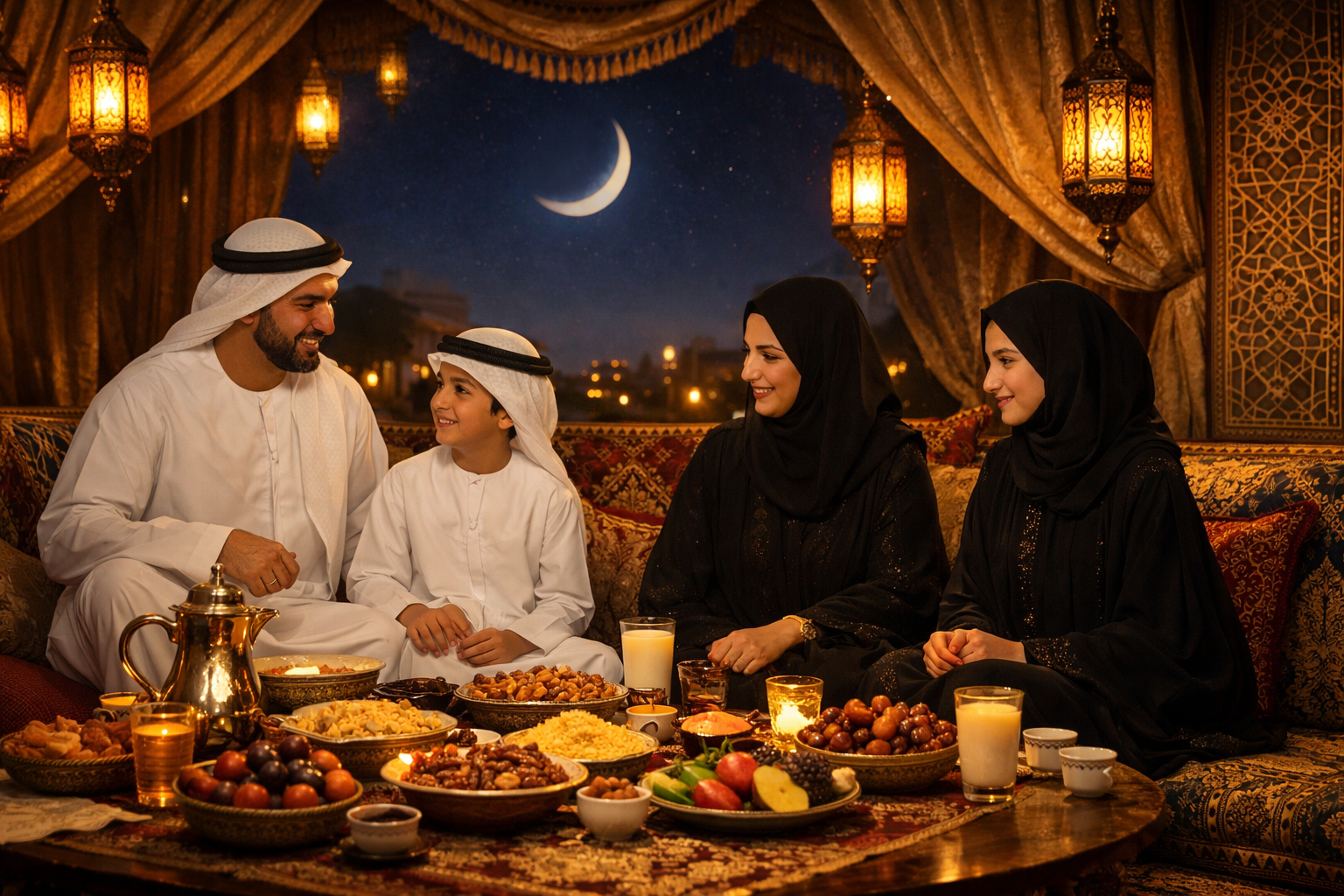
Millions of Muslims around the world celebrate Ramadan, which is the holiest month in Islam. Ramadan is very important spiritually and culturally in the United Arab Emirates. Suhoor, the meal eaten before the fast begins, is one of the most important things to do during this holy month. The Ramadan Suhoor tradition in the UAE shows faith, unity, hospitality, and the country’s history. It’s more than just food. It is a way to get ready spiritually, a way for families to get together, and a sign of kindness.
Suhoor happens before the Fajr prayer, when the world is still and calm. Families get up together, eat breakfast, and get ready for a day of fasting. The experience includes devotion, thankfulness, and a sense of cultural identity. Modernisation has changed many parts of daily life in the UAE over the years, but Suhoor is still very traditional. This article looks at the history, spiritual significance, traditional foods, social norms, and new developments that affect Suhoor in the Emirates.
The Religious Meaning of Suhoor in Islam
Suhoor is very important in Islam. The Prophet Muhammad (peace be upon him) told Muslims to eat before dawn because Suhoor is a blessing. It gives you the strength to fast and the focus to worship. Muslims don’t eat, drink, or do anything else physical from dawn to sunset. So, the meal before dawn is very important for getting the body and mind ready.
People in the UAE think of Suhoor as a holy time. The hours before sunrise are quiet and make you think. Before Fajr, a lot of people read the Quran, pray, and make supplications. This time makes faith stronger and makes people more aware of their spirituality. The Ramadan Suhoor Tradition in the UAE is one of the most beloved things to do during the holy month because it combines religious devotion with cultural warmth.
The history of Suhoor in Emirati society
Before oil was found and the country grew quickly, life in the Emirates was simple and focused on the community. Families relied on fishing, diving for pearls, farming, and trading. During Ramadan, people changed their daily routines to fit the hours of fasting. Communities changed their work hours, and evenings became busier than daytime.
In the past, the “Mesaharati” was a common figure associated with Suhoor. This person walked through neighbourhoods before dawn, beating a drum and calling out to wake people up so they could eat. His presence brought everyone together, and he made sure that no one missed Suhoor. Even though modern alarms have taken over this job, older people still remember how warm and charming this tradition was.
Suhoor in the UAE was shaped by how simple things were in the past. Families sat on floor mats, ate small meals, and thanked God for the food they had. Even though the country is doing well now, that feeling of gratitude still exists.
Traditional Foods for Suhoor
Food is an important part of Suhoor because it gives you energy that lasts all day while you fast. Traditional Emirati food is healthy and balanced, and it uses local ingredients and cooking styles.
Harees is one of the most popular foods eaten during Ramadan. It is made of wheat and meat that are cooked slowly until they are soft and creamy. This meal gives you strength and keeps you going for a long time. Another popular dish is balaleet, which is made with sweet vermicelli and eggs. This dish has both carbs and protein. People often call chebab “Emirati pancakes.” They are served with cheese and date syrup. Luqaimat are small fried dumplings with date syrup on top that add sweetness to the table, but people usually only eat a few at a time.
Families also eat fresh fruit, yogurt, milk, and a lot of water with these meals. Dates are still an important part of the meal because they have natural sugars and nutrients. People today may also make smoothies, eggs, oats, and whole-grain bread to keep their nutrition balanced. Food choices have grown, but traditional recipes still have cultural and emotional value in every Emirati home.
Getting closer to family and friends
Suhoor is not just about food; it’s also about making connections. Family ties are very important in the UAE, and Ramadan makes them even stronger. Parents wake their kids up gently, and families sit down at the table in a calm and cozy setting. People often talk about being thankful, having faith, and thinking about their day during Suhoor.
Extended families often get together in one house, especially on the weekends. Kids will remember these get-togethers for a long time, and they will also learn to respect their elders. The Ramadan Suhoor Tradition in the UAE reminds us that family unity is still essential in Emirati culture.
Friends also get together after Taraweeh prayers and talk until the early morning hours, when Suhoor begins. This kind of socialising brings people together and strengthens friendships. The mood is calm but also spiritually uplifting.
The Growth of Ramadan Tents and the Culture of Hospitality
Today, Dubai, Abu Dhabi, and other Emirates have luxury hotels and cultural centres that set up special Suhoor tents. These places mix traditional Arabic design with modern comfort. Lanterns, carpets, and seating in the majlis make the space feel real. Soft lighting and traditional music make the peaceful atmosphere even better.
Guests can choose from a wide range of dishes, from traditional Emirati food to food from other countries. Even though the setting is fancy, the focus is still on being together and being welcoming. In Emirati culture, it is very important to greet guests warmly. During Ramadan, people are more generous, and inviting others to Suhoor shows kindness and respect.
During this month, charitable organisations also have a big part to play. Volunteers give meals to people who need them and workers, making sure that everyone can get Suhoor. This spirit of giving makes the country more peaceful.
Health Concerns and a Balanced Diet
Health experts in the UAE often tell people to eat balanced Suhoor meals to keep their energy up during the day of fasting. Whole grains and other complex carbohydrates release energy slowly. Eggs, dairy, and lean meat are good sources of protein that help keep you strong. Fruits and vegetables are good sources of fibre and water.
Drinking enough water before dawn helps keep you from getting dehydrated during long summer days. To avoid getting thirsty, people stay away from too much salt and fried foods. During Ramadan, a lot of people in the area see nutritionists to help them eat well. Employers also change the hours of work to fit in with employees who are fasting, which shows how supportive the country is.
Cultural Identity and National Heritage
The UAE is a modern country with ties to the rest of the world, but it still holds on to its traditions. Ramadan shows how important it is to find a balance between progress and tradition. Government agencies put on cultural events to teach younger people about traditional ways of doing things. Schools hold Ramadan events to teach kids how to be patient, give to others, and be thankful.
Museums and heritage villages show tools and stories from the past that are connected to Ramadan. These programs make sure that future generations know how important it is to keep their identity. The Ramadan Suhoor Tradition in the UAE is a sign of national pride and continuity.
Suhoor in Different Emirates
Ramadan celebrations are different in each Emirate. Dubai is famous for its lively, diverse culture and big hospitality events. Abu Dhabi often stresses the importance of real culture and family-centred events. Sharjah puts a lot of emphasis on religious education and getting involved in the community. In the Northern Emirates, like Ras Al Khaimah and Fujairah, neighbourhoods still follow old traditions that are similar to those of the past.
Even though there are differences in different parts of the world, the spiritual meaning of Suhoor stays the same. Muslims all over the country get up before dawn, eat together, and get ready for a day of worship.
Unity in the Community and Peace in Society
People from many different countries and backgrounds live in the UAE. Ramadan brings Muslims in the country together in a way that no other time does. During Suhoor, everyone gets ready for the same act of worship, and social differences fade away. Sometimes, mosques set up group meals where volunteers serve simple food to people who come to pray.
This setting encourages respect, acceptance, and working together. People who don’t follow Islam also show respect during Ramadan by not eating during the day. This kind of understanding between people makes the country more peaceful.
The Calm Before Dawn
The hours before sunrise during Ramadan are different from other times. The streets are still, and the lights in the homes are warm. The call to prayer means that Suhoor is over and fasting has begun. This change from quiet thought to daily life is very moving.
A lot of people say that this is the most peaceful time of Ramadan. It lets people connect with their faith without any outside noise. The quiet of the early morning makes you more aware of your spirituality and more mindful.
Changing Habits and New Technology
Technology has changed the way families get ready for Suhoor. Mobile apps give you accurate prayer times and reminders. Online sites share meal plans and healthy recipes. Social media shows off creative table settings and cultural events.
Even with these improvements, families still try to keep the meal’s spiritual focus. To encourage meaningful conversation and reflection, many families limit screen time during Suhoor.
Travel and Cultural Experience
People come to Ramadan to see the real Islamic culture. Tourists are welcome to watch or take part in Suhoor events at hotels and heritage centres. People learn about hospitality, prayer, and fasting. They often say nice things about how peaceful it is and how strong the community is.
This kind of cultural exchange helps people around the world understand and appreciate Islamic traditions more.
The More Important Meaning of Suhoor
Suhoor teaches discipline and thankfulness in addition to eating and socialising. Getting up early takes determination and planning. It reminds people why they are fasting: to have self-control and feel sorry for those who are less fortunate. The Ramadan Suhoor Tradition in the UAE is a meaningful and useful way to show these values.
The tradition stays strong even as the world changes. Families pass it down to their kids, which keeps its spiritual meaning alive.
Questions that are often asked
What is the point of Suhoor during Ramadan in the UAE?
Muslims get ready for the day of fasting with Suhoor, which helps them physically and spiritually. It gives you energy and lets you pray and think about things before dawn.
What does “Suhoor” mean in Islam?
Islam strongly encourages suhoor because it brings blessings and gives believers strength for fasting.
What do people in the UAE usually eat for Suhoor?
Harees, Balaleet, Chebab, dates, milk, yogurt, fruits, and other healthy foods that give you energy for a long time are common.
Do hotels in the UAE have Suhoor events?
Yes, a lot of hotels have traditional Suhoor tents that have cultural decorations, good service, and a wide range of foods.
How does Suhoor help families get along better?
Families get together before dawn, have deep conversations, and spend time together, which makes their emotional bonds stronger.
Is Suhoor done in different ways in different Emirates?
Even though customs may differ a little from place to place, the spiritual essence and purpose stay the same across the country.
How has modernisation changed the way Suhoor is done?
Modern technology and fancy venues have made things easier and more attractive, but the basic spiritual and cultural values are still the same.
In conclusion
In the UAE, Suhoor stands for faith, heritage, unity, and giving. It links the past to the present and makes family and community ties stronger. Even though the UAE is growing quickly and has a lot of global influence, the Ramadan Suhoor tradition continues to thrive. Suhoor is still an important part of Ramadan in the Emirates because it includes balanced meals, spiritual reflection, and socialising.