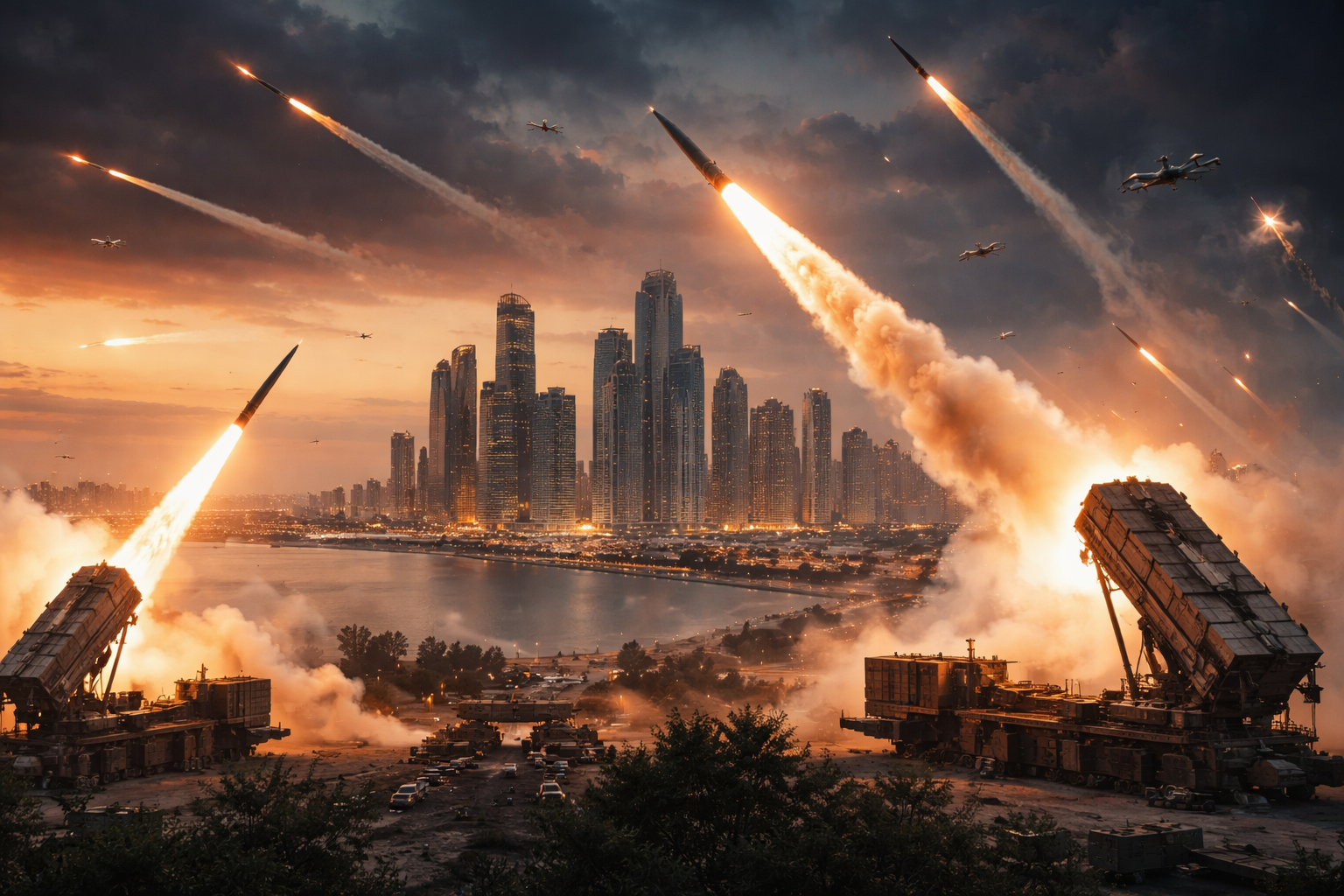
In recent months, the United Arab Emirates (UAE) has been on high alert as reports emerged of an increasing threat from ballistic missile attacks originating from Iran. The situation has highlighted the strategic importance of advanced air defence systems and the need for continuous vigilance in the Gulf region. The UAE has activated its air defence systems multiple times to meet repeated threats from Iran’s missiles, showing the nation’s strong preparedness against potential attacks. Understanding how these systems function, their capabilities, and the broader implications for regional security is critical for both policymakers and the general public.
The UAE’s rapid development as a global economic hub has made its cities and infrastructure attractive targets. As a result, the government has invested heavily in advanced air defence systems to protect citizens, infrastructure, and key economic assets. This article examines the UAE’s missile defence capabilities, the challenges it faces, and the steps it takes to maintain national security in coordination with international partners.
Understanding Ballistic Missiles and Their Threats
Ballistic missiles are a type of weapon that follows a predetermined trajectory, typically a parabolic arc, to deliver explosives or other payloads to distant targets. Unlike cruise missiles, which can maneuver throughout their flight, ballistic missiles rely on their initial propulsion and gravity to reach their target. Their potential for destruction makes them a major concern for national security.
These missiles vary in range, payload, and guidance systems. Short-range ballistic missiles can target nearby areas with precision, while medium- and long-range missiles can strike targets hundreds or even thousands of kilometers away. The increasing sophistication of Iranian missile technology has enabled the country to deploy missiles capable of evading traditional detection systems, making the task of UAE air defences dealing with a ‘barrage’ of ballistic missiles from Iran even more critical.
The threats posed by ballistic missiles are not only military but also economic and societal. A missile strike in a densely populated urban center like Dubai or Abu Dhabi could disrupt trade, tourism, and financial operations, and potentially cause significant civilian casualties. Consequently, understanding the nature of these threats helps explain the urgency behind the UAE’s investment in missile defence.
The UAE’s Air Defence Infrastructure
The UAE has established a sophisticated, multi-layered air defence network to counter ballistic missile threats. These systems are designed to detect, intercept, and neutralize incoming missiles before they can reach critical areas. The strategic design of these defences ensures that any missile threat can be addressed at multiple stages of its flight.
One of the primary pillars of the UAE’s defence strategy is the use of advanced missile interception systems, including internationally recognized technologies that are regularly updated to maintain operational readiness. The integration of radar networks, command centers, and rapid-response teams ensures that the UAE remains capable of responding effectively to any missile barrage.
The UAE air defences dealing with a ‘barrage’ of ballistic missiles from Iran are also designed to operate in coordination with allied forces, particularly in intelligence sharing and technological upgrades. This collaborative approach enhances the effectiveness of the UAE’s air defence systems, ensuring that threats are detected and neutralized before reaching critical targets.
Early Detection and Surveillance Systems
Early detection is the cornerstone of effective missile defence. The UAE has invested heavily in high-precision radar and surveillance systems that can detect missile launches within seconds. These radars are strategically positioned to provide maximum coverage across urban areas and critical infrastructure.
Once a missile launch is detected, the information is immediately transmitted to centralized command centers. These command centers use sophisticated software to calculate the missile’s trajectory and estimate its potential impact zone. This real-time analysis allows defence units to launch interceptors with high accuracy, minimizing the risk to civilians and infrastructure.
The effectiveness of early detection is enhanced by satellite intelligence and international cooperation. By monitoring missile movements beyond its borders, the UAE can anticipate threats and prepare its air defence systems in advance, ensuring that the UAE air defences dealing with a ‘barrage’ of ballistic missiles from Iran are always one step ahead of potential attacks.
Missile Interception Capabilities
The UAE has a multi-layered missile interception strategy that involves several types of defensive systems operating at different altitudes and ranges. This layered approach ensures that even if one system fails to intercept a missile, others can engage it at higher or lower stages of its trajectory.
The Patriot missile system is one of the main components of the UAE’s defensive arsenal. It is designed to intercept short- and medium-range ballistic missiles with high precision. The Terminal High Altitude Area Defence (THAAD) system complements this by targeting missiles at higher altitudes, ensuring that even long-range threats can be neutralized before reaching populated areas. Together, these systems provide comprehensive protection and allow for rapid, coordinated responses to missile threats.
Additionally, advanced targeting algorithms and AI-assisted detection systems enhance interception accuracy. By analyzing missile speed, trajectory, and potential evasive maneuvers, the UAE’s defence systems can adjust their intercept course in real time. This technological edge is a key factor in the effectiveness of the UAE air defences dealing with a ‘barrage’ of ballistic missiles from Iran.
Civilian Safety Measures
While military systems are essential, civilian protection is equally important. The UAE has implemented a range of safety protocols to ensure that residents are alerted to missile threats and can take appropriate action. Sirens, mobile notifications, and emergency alerts are used to inform citizens of potential danger zones. Public education campaigns and regular drills ensure that residents are familiar with evacuation procedures and emergency protocols.
The government has also invested in infrastructure designed to withstand missile attacks, including reinforced shelters and safe zones in urban centers. These measures not only protect civilians but also contribute to maintaining public confidence in the government’s ability to manage security threats effectively.
Geopolitical and Strategic Implications
The ongoing missile threat from Iran has significant geopolitical implications. The Gulf region has historically been a complex theatre of strategic competition, and the escalation of missile capabilities adds a new layer of tension. For the UAE, maintaining strong air defences is not just about national security; it is also about preserving regional stability and deterrence.
By demonstrating the effectiveness of its missile defence systems, the UAE warns potential aggressors that it will respond to attacks with immediate and effective countermeasures.This deterrence strategy is essential for preventing escalation and maintaining a balance of power in the region.
Moreover, the UAE’s collaboration with allies in technology, intelligence, and training reinforces its defensive posture. The UAE air defences dealing with a ‘barrage’ of ballistic missiles from Iran are therefore not only a national concern but also a key element of broader regional security dynamics.
Technological Advancements and Innovation
The UAE continues to invest in cutting-edge technologies to enhance its missile defence capabilities. Artificial intelligence and machine learning play a crucial role in predicting missile trajectories, optimizing interception points, and coordinating multiple defence systems simultaneously. These technologies reduce human error and increase response efficiency in high-pressure situations.
The integration of networked defence systems allows all radar units, interceptors, and command centers to operate in a coordinated manner.
This interconnected network allows the UAE to share information instantly, enabling defence teams to respond to missile threats in a coordinated and timely manner. Consequently, the UAE air defences dealing with a ‘barrage’ of ballistic missiles from Iran maintain high effectiveness even against sophisticated attacks.
Regular upgrades and training exercises play a crucial role in this readiness. Defence personnel conduct simulations that replicate real-world missile scenarios, preparing them to respond quickly and decisively under pressure. These innovations and practices strengthen the UAE’s position as a leader in advanced air defence networks in the Middle East.
Challenges and Limitations
Despite its advanced capabilities, the UAE faces several challenges in defending against missile attacks. Saturation attacks, in which multiple missiles launch simultaneously, can potentially overwhelm the defence systems.The emergence of hypersonic missiles, which travel at speeds far exceeding conventional interceptors, poses additional challenges.
Cybersecurity is another area of concern. As missile defence systems rely increasingly on digital networks and software, they become potential targets for cyber-attacks. Protecting these systems against electronic warfare is therefore a critical component of the UAE’s defence strategy.
International Collaboration
The UAE works closely with international partners, particularly the United States, to enhance its missile defence capabilities. This collaboration includes joint training exercises, intelligence sharing, and access to advanced missile interception technologies. Such partnerships enable the UAE to stay ahead of evolving threats and to respond effectively to missile attacks from Iran or other potential adversaries.
These collaborations also strengthen diplomatic ties and show the global community that the UAE actively maintains regional security. By demonstrating the effectiveness of its missile defence systems, the UAE contributes to broader deterrence and stability in the Gulf region.
Future Outlook
Looking forward, the UAE is likely to continue expanding and upgrading its missile defence infrastructure. Emerging technologies like AI, advanced radar, and improved interceptor missiles will strengthen the UAE’s ability to detect and neutralize threats. Regular training, infrastructure upgrades, and international collaboration ensure the UAE stays prepared for any missile barrage. By upgrading and reinforcing its air defence systems, the UAE keeps civilians safe and protects critical infrastructure, cementing its position as a regional leader in missile defence.
FAQs
Q1: How effective are UAE air defences against Iranian ballistic missiles?
UAE air defences are highly effective due to their multi-layered design, advanced radar systems, and precision interception technologies. The combination of Patriot missiles, THAAD systems, and AI-assisted targeting ensures robust protection against most short- and medium-range threats.
Q2: Have UAE air defences successfully intercepted missile attacks from Iran?
Although details are classified, reports indicate UAE air defences have successfully intercepted multiple missile threats, proving their effectiveness.
Q3: How are civilians protected during missile attacks?
The UAE implements early warning systems, mobile alerts, sirens, and evacuation protocols. Reinforced shelters and public education campaigns further ensure civilian safety during missile threats.
Q4: What are the main challenges facing UAE missile defence?
Challenges include saturation attacks, hypersonic missiles, and cybersecurity risks.
Q5: How does international collaboration enhance UAE air defences?
Partnerships with the United States provide the UAE with advanced missile technology, training, and intelligence, strengthening its defence capabilities.
Conclusion
The UAE air defences confronting a ‘barrage’ of ballistic missiles from Iran reflect the country’s firm commitment to national security, technological advancement, and civilian safety. Through advanced interception systems, AI-driven targeting, integrated surveillance networks, and strong international partnerships, the UAE maintains a high level of readiness against evolving missile threats while protecting its people and critical infrastructure.