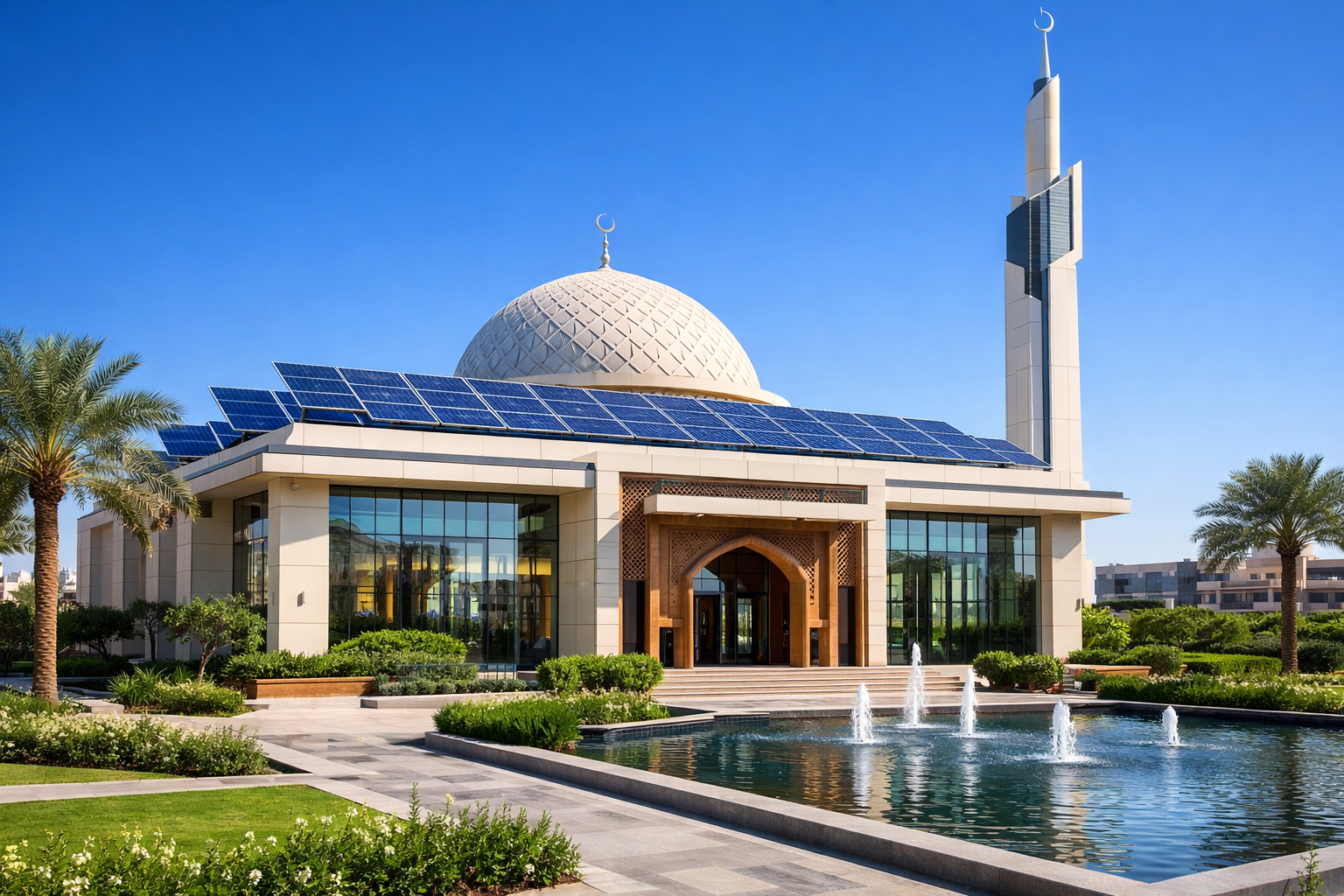
The UAE’s Net Zero Energy Mosque Opens in Masdar City: A huge success that combines environmentally friendly design with religious architecture. This mosque is in Abu Dhabi’s Masdar City, which is a centre for environmental innovation. It shows how cultural heritage and modern sustainability practices can work together. It is a model for environmentally friendly city growth and a peaceful place for spiritual growth.
The UAE has been investing in renewable energy and infrastructure that lasts for a long time. This mosque shows how serious the country is about lowering carbon emissions and making the world a cleaner, greener place. It is one of the first in the area to use as much energy as it makes, mostly from solar power, so it has net-zero energy consumption.
What Net Zero Energy Means for Religious Buildings
What does “net zero energy” mean?
A mosque that uses no energy at all runs on its own when it comes to electricity. It makes its own energy on-site to meet its needs, which reduces its need for outside power sources. The UAE’s Net Zero Energy Mosque Opens in Masdar City, showing how religious buildings can be environmentally responsible without losing their beauty or usefulness.
Why Net Zero Energy Is Important in the UAE
The UAE has environmental problems, such as a hot climate and a lot of energy use. Adding net-zero energy principles to buildings like mosques shows leadership in sustainability and encourages other areas to do the same. It also fits with the UAE’s bigger plans for reducing carbon emissions and using more renewable energy.
The mosque’s architecture is great because it combines old and new styles
The mosque’s architecture mixes traditional Islamic design with new engineering ideas. The way it is built makes the most of natural light and airflow, which cuts down on the need for artificial lighting and cooling. The design keeps its spiritual and aesthetic value while being very energy efficient.
Building and using materials that are good for the environment
The building was made with materials that were sourced locally and were good for the environment. That helped the building last longer and have less of an impact on the environment. These materials will help the mosque last longer and need less upkeep, showing that sustainability can be used in all parts of a building.
Strategies for Passive Design
The mosque uses passive design methods like natural ventilation, strategic shading, and thermal mass. These features make the building more comfortable for worshippers and less dependent on mechanical systems. That is a great example of energy-conscious architectural planning.
Integration of renewable energy: Solar energy systems
The mosque’s roof and open areas are covered in solar panels that generate electricity during the day. High-capacity battery storage makes sure that energy is always available, even at night or when it’s cloudy. The solar infrastructure at the mosque powers the lighting, cooling, and other systems that keep the building running.
Smart Energy Control
An intelligent energy management system keeps an eye on and improves energy use by turning off equipment that isn’t being used and cutting down on waste. The mosque reaches a true net-zero energy status by combining the production of renewable energy with real-time energy monitoring.
The Mosque’s Good Effects on the Environment
The UAE’s Net Zero Energy Mosque opens in Masdar City, which cuts down on carbon emissions and saves water and electricity—recycling greywater and using water-saving fixtures cut down on water waste, and solar energy and passive design cut down on energy use.
The mosque also teaches people about renewable energy and sustainable practices by showing them how they can be used in real life. People who come to see and pray can see how being environmentally responsible can go hand in hand with religious and cultural values.
Cultural and social importance
Being involved in the community and with your spirituality
People pray, meditate, and interact with each other at the mosque. Its design makes sure that people can worship comfortably while also making room for educational programs about sustainability.
Cultural tourism and respect
Tourists, architects, and researchers who are interested in sustainable design come to the mosque. It is a cultural and architectural landmark because it combines traditional Islamic architecture with green technology. That strengthens the UAE’s reputation as a world leader in sustainable development.
Masdar City: The Mosque Sustainability Hub’s Perfect Home
People all over the world know that Masdar City is a good example of sustainable urban planning. It is the best place for a net-zero energy mosque because it has renewable energy, electric transportation, and energy-efficient buildings.
Working together with city programs
The mosque adds a religious and cultural aspect to sustainability that fits with Masdar City’s larger goal. It shows how cities can combine environmentally friendly infrastructure with places for community and spiritual activities.
New technologies in the mosque: advanced solar technology
Solar panels have maximum power point tracking systems that make sure they produce the most electricity possible all day long.
Systems that save energy
LED lights, smart HVAC systems, and appliances that use less energy all help things run better while using less energy.
Cooling and Ventilation Without Active Systems
Strategically placed openings, shading, and airflow design cut down on the need for mechanical cooling, which is very important in Abu Dhabi’s hot climate.
Innovations in Eco-Friendly Materials
The mosque uses materials that are sourced locally and have a low impact on the environment, which makes it more durable and long-lasting.
Learning About Renewable Energy: Effects on Education and the Community
The mosque has programs and guided tours that teach people about solar energy and building technologies that are good for the environment. Visitors learn about how to use energy efficiency in religious and public buildings in real life.
Encouraging people to care about the environment
The mosque is an example of green architecture that encourages people and groups to be more environmentally friendly in their daily lives. That connects faith and environmental awareness.
What does this mean for architecture in the UAE in the future?
The UAE Net Zero Energy Mosque, which opens in Masdar City, sets a standard for future buildings in the UAE. It pushes architects, developers, and city planners to use renewable energy, eco-friendly materials, and energy-efficient design in both religious and non-religious projects.
The mosque shows that it’s possible to combine cultural heritage with modern ways of being environmentally friendly. That has led to similar projects in the Middle East and beyond. Its success makes the UAE an even stronger global leader in green architecture and sustainable urban development.
What Visitors Think
People who go to the mosque get a good mix of spirituality, learning, and caring about the environment. The peaceful interior, which gets light from outside and stays cool through passive design, makes meditation and worship better. Informational displays show how the mosque’s energy systems work and show how to be more environmentally friendly.
Everyone can visit the mosque, which makes it a welcoming place that offers cultural, educational, and spiritual value.
Awards and recognition around the world
The mosque’s eco-friendly design and cutting-edge architecture have earned it praise from around the world. It has won awards and certifications for being a green building that shows how it helps save energy, protect culture, and design buildings that are good for the environment. These awards show how serious the UAE is about sustainable development and encourage architects all over the world to do the same.
Questions that people often ask
What does it mean for a mosque to have net-zero energy?
A net-zero energy mosque is a building that makes as much energy as it uses, mostly from renewable sources like solar power. This means that it doesn’t need to rely on electricity from outside sources as much.
What city is the UAE Net Zero Energy Mosque in?
The mosque is in Masdar City, Abu Dhabi, UAE, which is a centre for projects that promote sustainability and renewable energy.
How does the mosque get to net-zero energy?
It gets to net-zero energy by using solar panels, smart energy management, passive design strategies, and building materials that are good for the environment and use less energy.
Can people visit the mosque?
Yes, people can visit the mosque, go to educational programs, and learn about renewable energy and buildings that last.
What makes Masdar City the best place for this mosque?
Masdar City is a great place for a net-zero energy mosque because it has renewable energy infrastructure, eco-friendly planning, and a commitment to sustainability.
What effect does the mosque have on the environment?
The mosque is a good example of how to take care of the environment because it cuts down on carbon emissions, saves water, encourages energy efficiency, and teaches people about sustainable practices.
Conclusion: A Landmark for the Future
The UAE’s Net Zero Energy Mosque Opens in Masdar City: This is a big step forward for both sustainable architecture and preserving culture. It shows that tradition and modern sustainability can work together by using cutting-edge technology, renewable energy systems, and eco-friendly materials.
It is a religious site as well as a cultural and educational landmark that encourages communities to be more environmentally friendly. The mosque is a model for religious and public buildings all over the world, showing that faith, culture, and caring for the environment can all coexist.
The UAE is still setting an example by showing a vision of a sustainable future where new ideas and old traditions can work together.