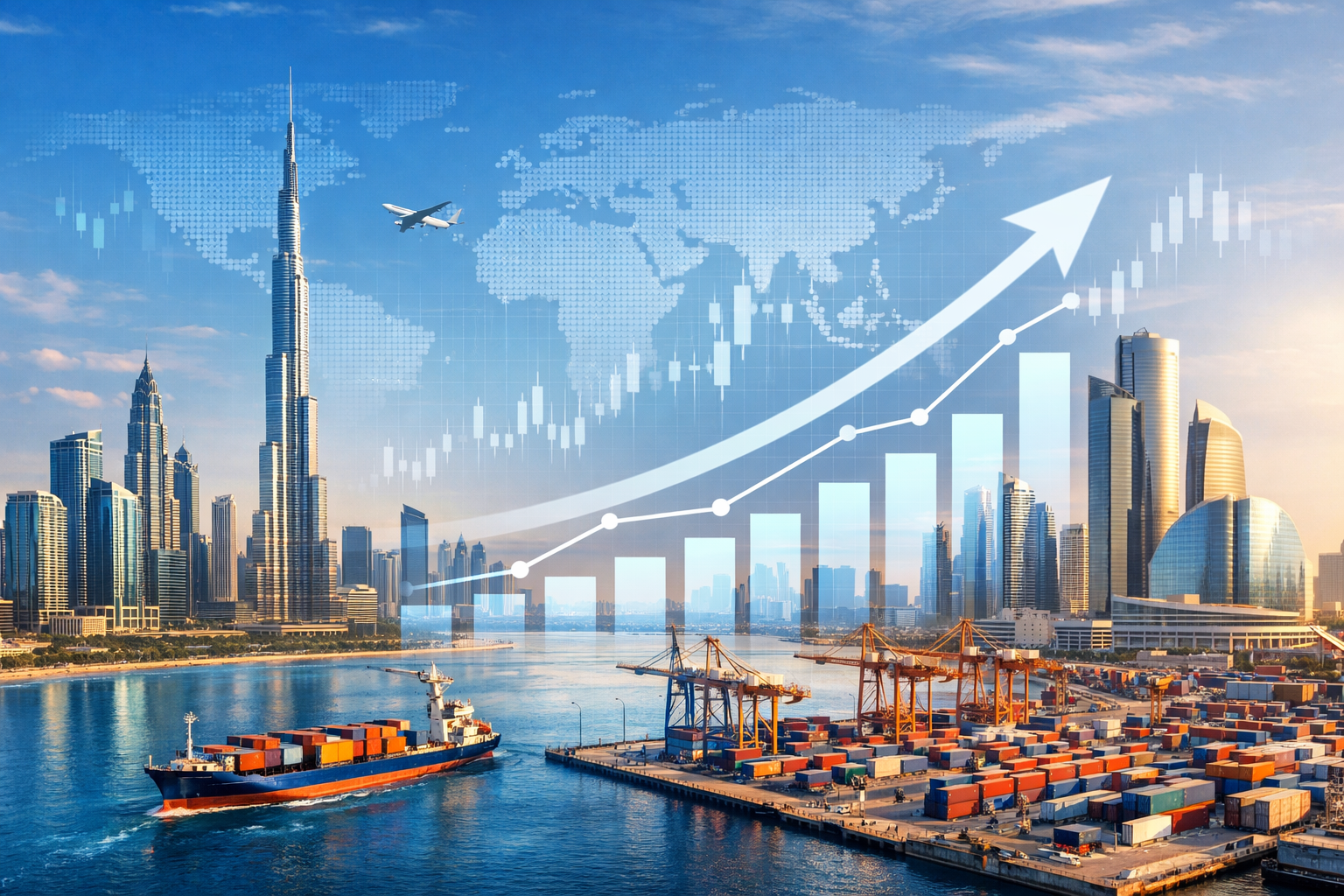
Over the past ten years, the United Arab Emirates has changed its economy from one that depended heavily on oil revenue to one that is more diverse and sustainable. The UAE’s non-oil GDP for the first nine months of 2025 shows this change, with strong growth in trade, tourism, finance, real estate, and technology, among other areas. Businesses, investors, and policymakers need to know about non-oil GDP because it shows how strong the economy is even when oil prices go up and down.
What does “non-oil GDP” mean?
The UAE’s non-oil GDP is the total value of all goods and services made there, not including money made from oil and gas. This measure is increasingly important as it shows how well the country is diversifying and which sectors are helping the economy grow sustainably. The UAE’s non-oil GDP for the first nine months of 2025 shows how trade, tourism, finance, real estate, technology, and small and medium-sized businesses are helping the economy grow.
The UAE Economy Needs Non-Oil GDP
Non-oil GDP is an important sign of how stable and growing an economy is. Non-oil GDP is a sign of long-term economic activity, while oil revenues can change based on world prices. It shows that the government’s policies are working to bring in investment, encourage new ideas, and help businesses grow. The UAE’s non-oil GDP showed resilience for the first nine months of 2025, which means that the country is successfully managing its economy and making sure it stays stable in the long term.
Important Sectors That Boost UAE Non-Oil GDP
Trade and Shipping
The UAE’s economy is still mostly based on trade and logistics. Its strategic location at the crossroads of Asia, Europe, and Africa ensures that trade is still a big part of the non-oil GDP. In the first nine months of 2025, the amount of manufactured goods that were exported and re-exported through Dubai’s ports went up steadily. Investing in ports, logistics hubs, and air freight corridors made trade easier, which increased the overall contribution of logistics to the UAE’s non-oil GDP in the first nine months of 2025.
Travel and Hospitality
Tourism has become a major force behind the UAE’s economic diversification. International travel made a strong comeback in the first nine months of 2025. Non-oil GDP growth was helped by high hotel occupancy rates, tourists spending more money, and the growth of luxury and cultural tourism. The government’s strategic push for sustainable and luxury tourism, along with hosting international exhibitions and events, helped the hospitality sector have a bigger effect on the economy as a whole.
Services for Money
During this time, the UAE’s financial sector grew a lot. Government rules and new technologies helped banking, insurance, and investment services grow. Foreign investors were drawn to digital financial services, fintech startups, and capital market activities, which also boosted economic activity in the US. Financial services were very important for the UAE’s non-oil GDP growth in the first nine months of 2025. That solidified the UAE’s status as a regional financial hub.
Building and Real Estate
The real estate and construction industries have always been important to the UAE’s diverse economy. In 2025, the growth of the non-oil GDP was mostly due to residential, commercial, and mega infrastructure projects. Urban growth, smart city projects, and foreign investment in real estate all helped the economy do better. Not only did construction projects create jobs, but they also helped related businesses grow. This shows how important real estate and construction are to the UAE’s non-oil GDP in the first nine months of 2025.
New Ideas and Technology
The UAE’s non-oil economy is now mostly driven by technology and new ideas. The government’s support for innovation hubs, startup incubation, and AI integration sped up the process of diversifying the economy. Small and medium-sized businesses that used technology helped create jobs, boost productivity, and grow the economy. The fintech sector, e-commerce, robotics, and digital services had a big impact on the UAE’s non-oil GDP in the first nine months of 2025. This shows that technology will be a key part of the country’s future economic strategy.
Government Program Strategies for diversifying the economy to support non-oil GDP
The UAE government has put in place several policies to cut down on its reliance on oil. Trade, tourism, real estate, finance, and new technologies are all areas that economic diversification programs focus on. Vision 2031 and other strategic programs stress sustainable development, regulations that make it easy to invest, and help for small and medium-sized businesses. All of these things had a direct effect on the UAE’s non-oil GDP in the first nine months of 2025.
Expansion of Free Zones
Dubai, Abu Dhabi, and other emirates have free zones that attract international businesses with tax breaks, better infrastructure, and easier rules. These areas help industries like logistics, manufacturing, finance, and technology, which boost economic activity and speed up growth in non-oil GDP.
Encouraging new ideas and technology
Investing in AI, fintech, robotics, and digital solutions by the government has helped make the economy modern and competitive. Innovation hubs and startup incubators give money and advice to small and medium-sized businesses (SMEs), which helps them make a big difference in the non-oil GDP.
Promoting Culture and Tourism
Hosting international events, trade shows, and exhibitions has brought in tourists and investors, which has helped the non-oil GDP grow. The UAE’s global appeal grew thanks to marketing campaigns that focused on culture, luxury, and eco-friendly tourism.
Detailed Performance by Sector: Growth in Trade and Logistics
Trade and logistics made a big difference to the UAE’s non-oil GDP, showing how the country is a great place for global trade. The economy did better overall because of more exports, re-exports, and better logistics. Key port expansions and investments in freight corridors made it easier for more goods to move, which will keep this sector growing.
Tourism is coming back and growing
Tourism came back strong, with both business and leisure travellers coming to the UAE from other countries. The hospitality industry got a boost from luxury resorts, cultural attractions, and events that happen all over the world. Tourism helped the economy grow by creating jobs and attracting foreign investment. This shows how important it is for the economy to diversify.
Financial Services Contributions
Financial services stayed strong, with banks, insurance companies, and investment firms all growing their businesses. Fintech made things run more smoothly and helped more people get access to money. Foreign investors were drawn to the capital markets, which helped the economy grow and made the UAE a stronger financial centre.
Building new homes and roads
Investing in real estate and building infrastructure continued to boost non-oil GDP. Mega projects, city growth, and smart city programs made it possible for new businesses to open and people to find work. Foreign investment in real estate markets helped keep the economy going.
Innovation in technology and small businesses
Small and medium-sized businesses (SMEs) and startups that are tech-driven played a big part in making the economy more diverse. Government support for innovation, the use of AI, and the growth of e-commerce all boosted productivity and directly led to the growth of non-oil GDP.
Over the Years: A Comparative Study
Historical data show that the UAE’s non-oil GDP has been steadily rising. Compared to previous years, the first nine months of 2025 show steady growth. Trade, tourism, finance, and real estate are doing better than oil-dependent sectors. This performance was mostly due to the recovery of the global market, smart investments, and government policies that helped.
Problems with Non-Oil GDP Growth
There are still problems, even though things are getting better. Changes in the global economy can affect trade and tourism. Inflationary pressures make building and buying homes more expensive. There is still a lot of competition from nearby economies for investment and skilled workers. The UAE needs to keep investing in technology, infrastructure, and people while dealing with global uncertainties in order to keep non-oil GDP growth going.
Investment Opportunities in Non-Oil Sectors in the UAE
Investors can make money by investing in technology, renewable energy, financial services, tourism, and real estate, which are all growing. The UAE is a great place to invest because it has a business-friendly environment, stable rules, and a strategic location on the world stage. Emerging fields like AI, fintech, and e-commerce have a lot of room for growth, and tourism and hospitality continue to bring in money from other countries.
Looking Ahead
The UAE’s non-oil GDP in the first nine months of 2025 sets the stage for more growth. The economy is expected to grow because of more technology, trade, tourism, finance, and real estate. A strong base is built by government policies that focus on diversification, sustainability, and foreign investment. Analysts say that the UAE’s non-oil GDP will keep growing steadily, which will make the economy more stable and less reliant on oil revenue.
Questions and Answers About UAE Non-Oil GDP
What is the GDP of the UAE that isn’t oil?
UAE without oil GDP is the total value of all the goods and services made in a country, not including money made from oil. It shows how well trade, tourism, finance, real estate, and technology are doing.
How did the UAE’s non-oil GDP do in the first nine months of 2025?
In the first nine months of 2025, the UAE’s non-oil GDP grew a lot in many areas. The main contributors were trade, tourism, finance, real estate, and technology.
What parts of the economy grew the most without oil?
The main contributors were trade and logistics, tourism and hospitality, financial services, real estate, and small and medium-sized businesses (SMEs) that use technology.
What government programs help the economy grow without oil?
Some of the government’s plans are to diversify the economy, build free zones, promote innovation and technology, run tourism campaigns, and make it easier for foreign investors to invest.
What does the future hold for the UAE’s non-oil GDP?
The outlook is good because technology, finance, real estate, tourism, and renewable energy are all expected to keep growing. The non-oil economy will get stronger thanks to government plans and partnerships around the world.
Conclusion
The UAE non-oil GDP first nine months of 2025 highlights the country’s successful transition toward a diversified and resilient economy. Growth across trade, tourism, financial services, real estate, and technology demonstrates the effectiveness of government policies, strategic investments, and innovation-driven initiatives. Non-oil GDP not only reflects the UAE’s economic stability independent of oil fluctuations but also underscores the nation’s potential as a global hub for business, investment, and technological advancement.
As the UAE continues to promote entrepreneurship, support SMEs, and attract international investment, the outlook for non-oil sectors remains optimistic. Sustainable development, smart infrastructure, and digital innovation will continue to drive growth in the coming years. For investors, businesses, and policymakers, understanding the trends in non-oil GDP provides valuable insight into opportunities that can shape the UAE’s long-term economic trajectory.