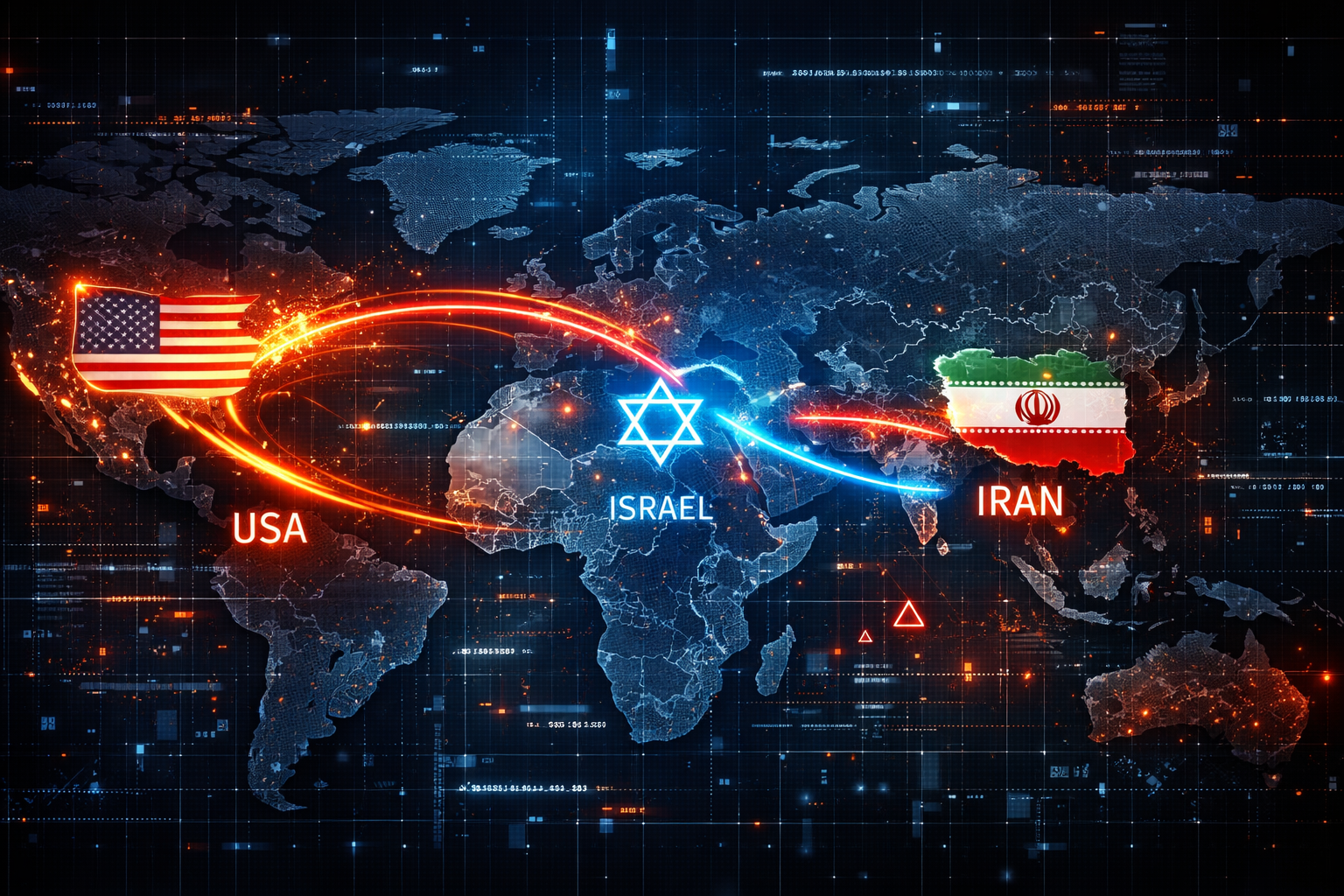
The Middle East has long been a hotspot for geopolitical tension, and in today’s digital age, conflicts are increasingly extending into cyberspace. Security experts warn that the US-Israel-Iran conflict may trigger unprecedented cyberattacks, potentially affecting critical infrastructure, financial markets, government operations, and private businesses across the world. Unlike conventional warfare, cyberattacks can happen instantly, silently, and globally, leaving nations vulnerable to unseen threats. Understanding the potential risks and preparing for possible scenarios is essential for governments, businesses, and individuals alike.
The Rise of Cyber Warfare in International Conflicts
Cyber warfare has become an integral part of national security strategies worldwide. Countries now rely on digital tools not just for defense but also for strategic offensive actions. Cyber operations include espionage, sabotage, misinformation campaigns, and digital disruption of essential systems. What sets cyber warfare apart is its ability to bypass physical borders, enabling attackers to target distant countries within seconds.
Historically, cyber operations have been employed to weaken adversaries, gather intelligence, and influence political outcomes without resorting to traditional military measures. As tensions between the United States, Israel, and Iran continue to escalate, the digital domain increasingly becomes a battlefield. The warning that US-Israel-Iran conflict may trigger unprecedented cyberattacks reflects the growing urgency in addressing these threats on a global scale.
Why the US-Israel-Iran Conflict Is a High-Risk Scenario
The combination of political tension, historical hostilities, and advanced technological capabilities among the United States, Israel, and Iran makes this conflict particularly prone to cyber escalation. Iran has invested heavily in cyber capabilities aimed at disrupting regional adversaries and gathering intelligence. Israel is renowned for its advanced cybersecurity technologies and expertise, often leveraging digital operations to protect national interests. The United States possesses the most extensive cyber infrastructure and offensive capabilities in the world.
This balance of power means that any escalation could quickly spill into cyberspace. Analysts suggest that the US-Israel-Iran conflict may trigger unprecedented cyberattacks because all parties are equipped to launch sophisticated digital strikes with potentially global repercussions.
Potential Cyber Targets
Cyberattacks often focus on critical systems that sustain a nation’s economy and public services. Energy infrastructure is particularly vulnerable, including power plants, oil refineries, and gas pipelines. A successful attack on these facilities could result in widespread blackouts, disrupt fuel supply, and halt industrial operations.
Financial institutions are equally at risk. Banks, stock exchanges, and payment networks depend on digital systems, and disruption can lead to temporary freezes in transactions, market panic, and long-term economic instability. Cyberattacks on healthcare systems could prevent hospitals from accessing patient records or disrupt life-saving equipment, creating risks for public safety. Transportation and aviation networks, dependent on digital communication, could face operational delays, endangering both cargo and passenger services.
Finally, government and defense networks are prime targets. These systems contain sensitive information, military intelligence, and strategic communications. Compromising them can create both operational and reputational damage, escalating tensions further.
The Role of State-Sponsored Hacker Groups
State-backed cyber groups are central players in modern conflicts. Unlike typical cybercriminals, they operate with government funding, strategic direction, and advanced technical skills. Their operations include stealing sensitive data, disrupting industrial control systems, conducting espionage, and deploying ransomware.
During times of geopolitical tension, these groups act quickly, often anticipating political moves and striking with precision. Their attacks may be invisible at first, making detection and attribution extremely difficult. The possibility that the US-Israel-Iran conflict may trigger unprecedented cyberattacks is heightened by the presence of these highly capable state-sponsored actors.
The Global Ripple Effect of Cyberattacks
Cyberattacks in the context of this conflict could extend far beyond the immediate region. Disruptions in energy, finance, and communications can cause cascading effects on a global scale. Multinational corporations with data centers in affected regions may experience interruptions in operations, supply chain delays, and financial losses.
Misinformation campaigns, often part of cyber operations, can exacerbate instability by spreading false news, manipulating public perception, and causing social unrest. When coupled with attacks on essential services, the cumulative impact could destabilize not only the nations involved but also global markets.
Economic Implications
The economic fallout from cyber warfare can be severe. Disruptions to banking and trade systems affect investor confidence, trigger fluctuations in currency values, and slow down commercial activities. Small and medium-sized enterprises are particularly vulnerable, as they often lack advanced cybersecurity defenses.
Insurance markets may face a surge in claims, leading to higher premiums and restricted coverage for high-risk sectors. The long-term economic impact could force governments and corporations to invest significantly in cybersecurity infrastructure, highlighting the high stakes of modern cyber conflicts.
The Strategic Value of Cyber Operations
Cyber warfare is not merely a tactical tool; it is a strategic instrument. It allows nations to influence outcomes, send warnings, and exert pressure without direct military engagement. The US-Israel-Iran conflict may trigger unprecedented cyberattacks because digital operations can achieve significant objectives while maintaining plausible deniability and limiting physical consequences.
This strategic use of cyber capabilities has prompted nations to strengthen both offensive and defensive digital measures. Investment in cybersecurity, threat detection systems, and intelligence sharing has become critical for mitigating risk in an interconnected world.
Protecting Critical Infrastructure
Critical infrastructure forms the backbone of modern society, including energy, telecommunications, transportation, and healthcare systems. Cyberattacks targeting these systems can cause cascading failures affecting millions of people. For instance, a targeted attack on electricity grids could paralyze healthcare, transport, and communication networks simultaneously.
Governments prioritize cybersecurity for critical infrastructure by implementing regular audits, advanced monitoring, and rapid response capabilities. Preparedness remains essential, as no system is entirely immune from sophisticated cyber threats.
Cybersecurity Measures for Businesses
Businesses play a vital role in the global cybersecurity ecosystem. Companies must protect sensitive data, financial transactions, and operational systems. Implementing multi-factor authentication, data encryption, employee training, and regular software updates is essential.
A robust incident response plan ensures businesses can respond quickly to threats, minimizing operational and financial damage. The potential for the US-Israel-Iran conflict may trigger unprecedented cyberattacks highlights the need for companies to integrate cybersecurity into overall risk management strategies.
Public Awareness and Cyber Responsibility
Individuals are also part of the cybersecurity chain. Phishing scams, misinformation, and fraudulent online activities often increase during periods of geopolitical tension. Public awareness campaigns can educate citizens about digital hygiene, including verifying information sources, using strong passwords, and avoiding suspicious links.
When citizens remain vigilant, they reduce the success rate of cyberattacks, protecting not only themselves but also larger networks connected to critical infrastructure and private businesses.
Future Outlook of Cyber Warfare
The evolution of technology promises to make cyber warfare increasingly complex. Artificial intelligence, automation, and quantum computing may enhance both defensive and offensive capabilities. Analysts predict that cyber conflicts will become more silent, precise, and integrated with strategic national objectives.
The statement that US-Israel-Iran conflict may trigger unprecedented cyberattacks underscores the importance of global preparedness, international cooperation, and continuous investment in cybersecurity. Nations must balance technological innovation with responsible use, ensuring that digital spaces remain secure despite rising tensions.
International Cooperation in Cybersecurity
Global collaboration is crucial to mitigate the risks of cyber escalation. Intelligence sharing, coordinated defense strategies, and collective response mechanisms reduce vulnerability. Countries that maintain strong partnerships in cybersecurity can detect and respond to threats more efficiently, minimizing potential damage.
The US-Israel-Iran conflict may trigger unprecedented cyberattacks, but international alliances can act as a deterrent, discouraging attacks through collective security and shared knowledge.
FAQs
1. Why is the US-Israel-Iran conflict linked to cyberattacks?
Cyberattacks offer a means to exert pressure and disrupt adversaries without direct military engagement. They allow nations to gather intelligence, weaken critical systems, and influence geopolitical outcomes while avoiding physical confrontation.
2. Which sectors are most at risk during cyber conflicts?
Energy, finance, healthcare, transportation, and government defense networks are the most vulnerable. These sectors are crucial for national security, economic stability, and public safety, making them prime targets.
3. Can ordinary citizens be affected by these cyberattacks?
Yes. Disruptions to banking, healthcare, communication, and electricity can affect millions of people, creating risks in everyday life. Cyberattacks can also expose personal information and propagate misinformation.
4. How can businesses prepare for potential cyber threats?
Businesses should implement strong cybersecurity measures, including multi-factor authentication, encryption, software updates, employee training, and a detailed incident response plan. Preparedness ensures quick recovery and minimizes damage.
5. Is international cooperation essential in preventing cyber warfare?
Absolutely. Intelligence sharing, joint defense strategies, and global coordination improve early threat detection, reduce risks, and create deterrence against large-scale attacks.
6. Will cyber warfare replace traditional warfare?
Cyber warfare complements traditional military operations but will not fully replace them. It is primarily a tool for disruption, intelligence gathering, and strategic influence, often operating in parallel with conventional forces.
7. How can individuals contribute to cybersecurity during geopolitical tension?
Citizens can protect themselves by verifying online information, avoiding suspicious links, using strong passwords, and staying informed about cybersecurity threats. Public vigilance helps protect broader digital networks.
Conclusion
The modern era has transformed conflicts from traditional battlefields to the digital realm, making cyber warfare a critical component of national security. The ongoing tensions in the Middle East, particularly between the United States, Israel, and Iran, highlight the urgency of this new threat. Analysts increasingly warn that the US-Israel-Iran conflict may trigger unprecedented cyberattacks, potentially targeting energy grids, financial systems, healthcare networks, transportation, and government operations. These attacks can have far-reaching consequences, disrupting daily life, global markets, and public trust in institutions.
Preparedness is now a shared responsibility. Governments must invest in robust cyber defenses, international cooperation is essential for early threat detection, businesses must secure their digital infrastructure, and individuals must remain vigilant online. As technology continues to evolve, the nature of cyber threats will become more sophisticated, precise, and silent, making continuous adaptation and awareness indispensable.