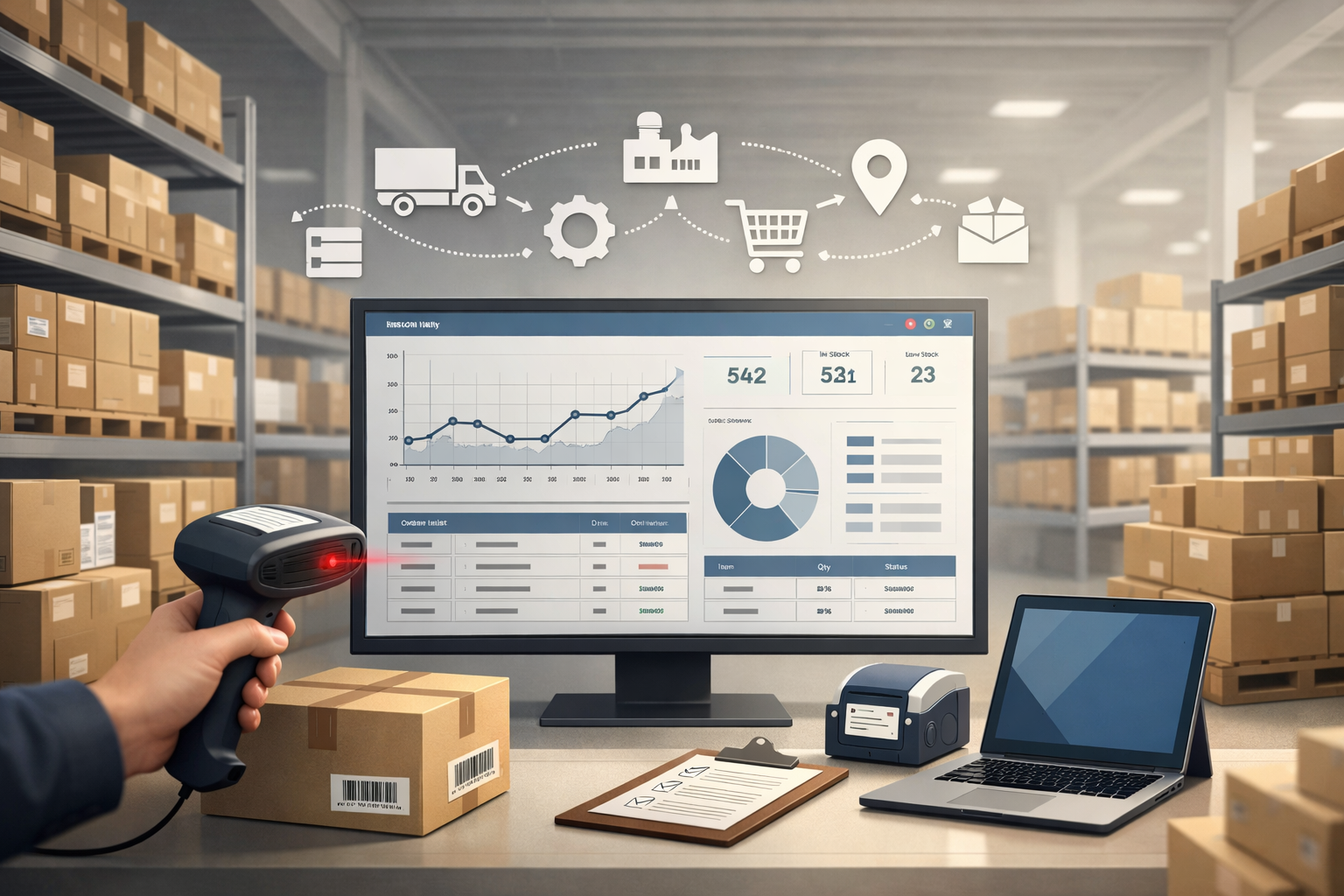
Every business that sells things needs inventory. Inventory decisions have a direct impact on profitability, customer satisfaction, and operational efficiency for businesses of all sizes, from small stores to large manufacturers. Companies can run into problems like running out of stock, having too much inventory, wasting money, and having deliveries that are late if they don’t manage their inventory well. That is why understanding and applying effective inventory management techniques is essential for long-term business success.
This in-depth guide goes over everything you need to know about managing your inventory. It covers its meaning, importance, types, methods, benefits, challenges, best practices, and future trends. The material is meant to be easy to understand and use, and it gives all the information needed so that anyone can use the ideas.
Getting to Know Inventory Management
Managing inventory means ordering, storing, keeping track of, and controlling stock all the way through the supply chain. It includes keeping track of raw materials, items that are still being worked on, finished goods, and supplies needed for operations. The main goal of managing inventory is to make sure that customers can get the products they need without keeping too much stock.
Businesses can balance supply and demand better when they manage their inventory well. It helps companies to run smoothly, cut costs, and make better choices. On the other hand, bad inventory management can cost money and make things run less smoothly.
Why managing inventory is important for running a business
Managing inventory is very important for running a business on a daily basis. It has an effect on buying, making, selling, storing, and helping customers. Companies can make better plans and respond quickly to changes in demand when their inventory levels are correct.
One of the best things about good inventory management is that it helps your cash flow. Too much inventory takes up money that could be used for other things. At the same time, not having enough inventory means missing out on sales. Good inventory control makes sure that stock levels are always at their best.
Managing your inventory also helps keep your customers happy. Customers expect products to be available and delivered on time. When businesses keep track of their inventory well, they can fill orders correctly and on time, which makes customers trust and stay loyal.
Different kinds of inventory that businesses use
There are different kinds of inventory in various types of businesses. Knowing these kinds helps companies to pick the best way to keep track of their stock.
Raw materials are the basic parts that are used to make things. To avoid delays in production, these materials need to be available in the right amounts. Good management of raw materials cuts down on downtime and makes production more efficient.
Items that are partially finished are in the work-in-progress inventory. To keep production running smoothly and avoid bottlenecks, this type of inventory needs to be watched closely.
Finished goods are items that are ready to be sold. Managing your inventory of finished goods is important for meeting customer demand and keeping storage costs low.
Maintenance, repair, and operations inventory includes things that help with daily operations but aren’t part of the final product. These things may not seem as important, but bad management can stop a business from running smoothly.
A look at different ways to manage inventory
Companies use different ways to manage their inventory to keep track of how much they have. Each method is meant to fix certain inventory problems and make things run more smoothly. The method you choose will depend on things like the size of your business, the type of business you are in, the patterns of demand, and how complicated your supply chain is.
Businesses can cut down on waste, make better predictions, and keep their products in stock all the time by using inventory management techniques. To get better results, a lot of businesses use a mix of methods.
The Just-In-Time Inventory Method
The Just-In-Time method is all about getting inventory only when you need it for making things or selling them. This method cuts down on waste and storage costs. Companies that use this method depend a lot on accurate predictions and suppliers they can trust.
The Just-In-Time method makes things run more smoothly, but it also has risks. Stock shortages can happen when suppliers are late or demand changes suddenly. So, to be successful, you need strong relationships with suppliers and careful planning.
Method for Finding the Economic Order Quantity
The Economic Order Quantity method figures out the best number of orders to make that will keep inventory costs as low as possible. Ordering costs and holding costs are two examples of these costs. This method helps businesses make smart choices about what to buy.
This method works best for businesses that have steady demand patterns. It helps cut down on unnecessary costs and makes planning for inventory more accurate.
The ABC Analysis Method
ABC analysis sorts inventory by how much it is worth and how important it is. Items of high value need to be closely monitored, while items of lower value don’t need as much attention. This method helps companies put their resources where they will do the most good.
Companies can use ABC analysis to set priorities for managing their inventory and make their operations more efficient overall.
The First-In, First-Out method for managing inventory
The First-In, First-Out method makes sure that the oldest stock is sold first. People often use this method for things that go bad quickly or that need to be done promptly. It lowers the chance of things going out of style and waste.
FIFO is also better for keeping track of inventory and showing how products really move, which is why many industries prefer it.
The Safety Stock Inventory Method
Safety stock protects you from the unknown. It keeps businesses safe from sudden increases in demand or problems in the supply chain. Keeping safety stock on hand keeps operations running smoothly and stops stockouts.
But too much safety stock makes holding costs go up. Businesses need to carefully figure out how much safety stock they need based on how demand changes and how long it takes to get things.
How Technology Helps with Inventory Management
Technology has changed the way companies keep track of their inventory. Automated systems that give you real-time visibility and data-driven insights are taking the place of manual processes.
Businesses can keep track of their stock levels, keep an eye on sales trends, and automatically reorder with inventory management software. These systems make things run more smoothly and cut down on mistakes.
Barcode and RFID technologies make things even more accurate by keeping track of where inventory is moving. Businesses can easily manage their inventory from anywhere and grow their operations with cloud-based platforms.
Advantages of Using Inventory Management Methods
Using the right methods for managing your inventory can be very helpful. Companies have better control over their inventory, more cash flow, and lower operating costs.
Good inventory management makes it easier to predict future demand, which helps businesses get ready for it. It also makes it easier for suppliers to work together and lowers the chance of having too much or too little stock.
When inventory is managed well, customers are happier. Orders are filled more quickly, mistakes are less likely to happen, and the quality of service stays the same.
Common Problems with Managing Inventory
Inventory management is important, but it comes with a lot of problems. It’s hard to predict what will happen when demand changes, especially in industries that have seasons.
Supplier delays can mess up plans for inventory and stop production. Bad data accuracy means wrong stock levels and bad decisions.
Businesses have to be very careful about how much inventory they keep because they don’t have a lot of room to store it. It is hard to deal with these problems without the right systems in place.
Best Ways to Manage Your Inventory Well
To manage your inventory well, you need to keep an eye on it all the time and plan. Regular audits of your inventory help you find mistakes and stop losses.
Using sales data and past trends helps make better predictions. Setting reorder points makes sure that stock is always available without having too much of it.
Training employees is also very important. Having skilled workers lowers mistakes and speeds up processes. Regular performance reviews help find inventory that isn’t selling well or is out of date.
Managing Inventory for Small Businesses
Small businesses often have to work with tight budgets and few resources. Even simple systems for managing inventory can get good results.
Small businesses can stay in control and make more money by focusing on fast-moving products, setting basic reorder levels, and using cheap software tools.
Managing Inventory for Big Companies
Big businesses have to deal with complicated supply chains that involve many locations and suppliers. Advanced inventory systems make it possible for automation, analytics, and cross-departmental integration.
To keep things running smoothly, these companies use data-driven methods for managing their inventories.
How managing inventory affects the customer experience
Managing inventory has a direct impact on how customers feel about your business. When there are stockouts, customers are unhappy, and sales are lost. Late deliveries hurt the reputation of a brand.
Good inventory management makes sure that products are always available and that orders are filled on time. That makes customers trust you and makes them want to buy from you again.
Trends in inventory management for the future
As technology improves, inventory management keeps changing. AI makes it easier to predict demand and make decisions.
Automation cuts down on manual work and makes things run more smoothly. Predictive analytics helps businesses stay ahead of changes in the market and change their inventory plans accordingly.
Sustainability is also becoming more important. Companies are working to cut down on waste and make the best use of their resources.
Questions that people often ask about managing inventory
What are some ways to manage your inventory?
Inventory management techniques are ways to keep track of stock levels, monitor how inventory moves, and make ordering and storing processes more efficient.
What makes managing inventory so important?
Managing inventory helps businesses save money, keep cash flow steady, avoid running out of stock, and make customers happier.
What is the best way for businesses to keep track of their inventory?
The best way to do this depends on the size of the business, the industry, and the patterns of demand. A lot of companies use more than one method to get better results.
Can managing your inventory help you make more money?
Yes, good inventory management cuts down on waste, makes things run more smoothly, and helps the company make more money.
How does technology make it easier to keep track of inventory?
Technology makes it possible to track things in real time, automate tasks, make better decisions, and make better predictions.
In conclusion
Managing inventory is an important part of running a business because it affects how well it runs, how much money it makes, and how happy its customers are. Companies that know how to manage their inventory have more control over their resources and operations.
Companies can cut costs, improve service quality, and grow in a way that lasts by using the right methods, adopting technology, and following best practices. This guide gives you a full understanding of how to manage your inventory and is a great resource for businesses that want to make their inventory systems work better.