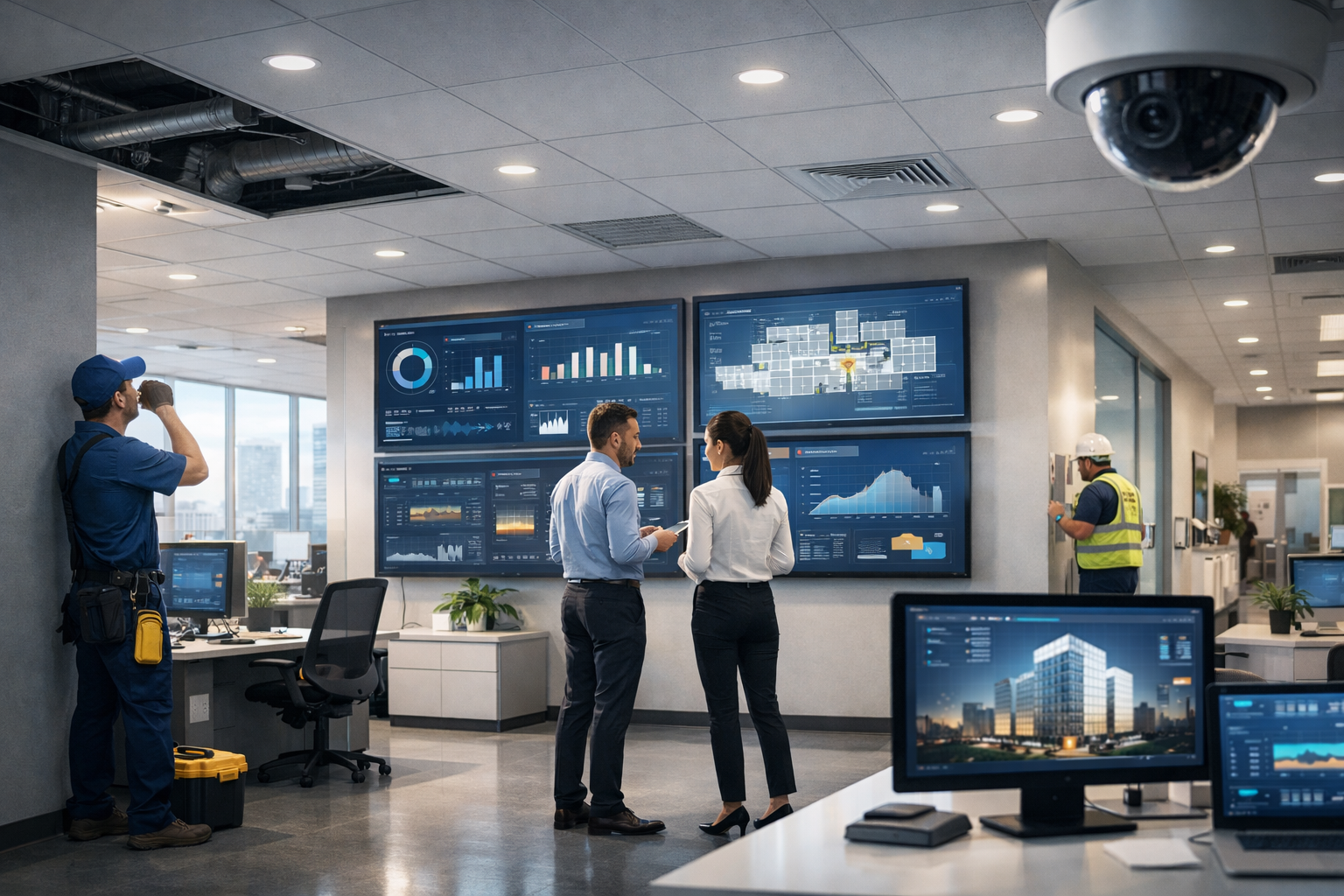
Facility management is an important part of running a business today. It includes planning, managing, and keeping up with an organization’s physical assets and services. It is a broad field that combines people, processes, and technology to make sure that workplaces and facilities run smoothly and efficiently. Good facility management makes sure that employees, clients, and visitors are safe, comfortable, and able to get things done. Putting facility management first not only makes operations run more smoothly, but it also saves a lot of money, makes employees happier, and makes sure that the company follows all legal and environmental rules. Facility management has become a strategic function that gives businesses of all sizes and in all industries a competitive edge in a business world that is getting more and more competitive.
What is the job of a facility manager?
Facility management is the job of making sure that a company’s buildings, services, and assets are all working together and in good shape. It covers everything from cleaning and maintaining buildings to managing energy use, security, and space planning. The main goal of facility management is to make an organization more productive by making sure that the environment is safe, efficient, and conducive to work. Facility management’s main job is to make sure that all of a building’s systems, equipment, and resources work as well as possible while keeping costs, risks, and disruptions to a minimum.
Why Facility Management is Important
You can’t say enough about how important facility management is. It has a direct effect on productivity, employee health, and managing costs. A well-kept facility keeps equipment from breaking down, cuts down on downtime, and makes sure that everyone is safe. Facility management also makes it easier to follow rules and regulations, such as those about health, safety, and the environment. It lowers legal risks and makes the organization more credible. Facility management helps the environment by using sustainable methods like systems that use less energy and cutting down on waste. Also, it allows employees stay engaged and happy by making sure the workplace is clean, comfortable, and conducive to getting work done.
Main Duties of Facility Management
Facility management has a lot of different duties that cover many parts of how a business runs. One of the most important parts of building maintenance is checking and fixing electrical systems, HVAC units, plumbing, structural elements, and other important infrastructure on a regular basis. Space management makes sure that office layouts and workspaces are set up in the best way for productivity and efficiency. Security management means putting in place security cameras, access controls, and plans for what to do in an emergency to protect people and property. It’s very important to keep things clean and hygienic, especially in schools, hospitals, and offices. Energy management is all about using energy in the best way possible by using systems that work well and practices that are good for the environment.
Different kinds of facility management
There are two main types of facility management: hard facility management and soft facility management. Hard facility management is all about the physical parts of a building, like its plumbing, electrical, mechanical, and structural systems. It makes sure that the building and its equipment are in good working order and well cared for. On the other hand, soft facility management is in charge of services that make people feel more comfortable and happy in the building. Cleaning, catering, security, reception, and other services that make the place pleasant and productive are all part of this. To make an operational ecosystem that is balanced and works well, both hard and soft facility management are very important.
Benefits of Managing Facilities
There are many benefits for businesses that invest in facility management. Good facility management saves a lot of money by keeping equipment from breaking down and using less energy. Proactive maintenance and timely upgrades can help infrastructure and assets last longer, which means fewer expensive replacements are needed. Facility management makes sure that businesses follow all safety and legal rules, which lowers the chance of getting fined or having to stop working. It also makes employees happier by giving them a clean, safe, and comfortable place to work, which boosts productivity and morale. Companies that include sustainability in their facility management plans also have a smaller impact on the environment, a better reputation, and are in line with global environmental standards.
The Process of Managing Facilities
Many steps in the facility management process are all connected. Planning starts with figuring out what the organization needs in terms of facilities, setting goals, and making a strategic plan. During the implementation phase, maintenance schedules are carried out, resources are distributed, and services are coordinated. Monitoring is an important step that includes keeping an eye on performance, maintenance tasks, and energy use to make sure everything is running smoothly. The last step is optimization, which is when facility managers find ways to make things better, save money, and make the facility more sustainable and useful. With this structured approach, businesses can keep running smoothly while also becoming more efficient and cost-effective in the long run.
What Technology Does for Management
Technology is very important to managing facilities today. Computer-Aided Facility Management (CAFM) software makes it easier to keep track of assets, plan maintenance, and make the best use of space. Integrated Workplace Management Systems (IWMS) let you manage many parts of your facility’s operations from one place. This includes space planning, energy use, and vendor management. Building Automation Systems (BAS) can automate lighting, heating, ventilation, and security, which makes things run more smoothly and lowers costs. Smart sensors and Internet of Things (IoT) devices let you keep an eye on energy use, equipment performance, and occupancy in real time. This allows facility managers make decisions based on data that improve how well the facility runs. Technology-driven facility management makes sure that resources are used well, maintenance is done ahead of time, and operational problems are kept to a minimum.
Problems with managing facilities
Management has a lot of benefits, but it also has a lot of problems. Organizations often can’t afford to buy new technologies or keep their infrastructure in the best possible shape because of budget limits. It can be hard and take a lot of time to coordinate with many service providers and vendors. Regulatory standards are always changing, so you have to be on the lookout for them and be ready to change. It can also be hard to find a balance between operational efficiency and employee comfort and satisfaction, especially in big companies or companies with multiple locations. Also, the use of advanced technology solutions brings up issues of cybersecurity and data management that need to be dealt with in order to make sure that facility management is safe and effective.
Best Ways to Manage a Facility
To get the most out of their facilities, businesses should follow best practices in facility management. Preventive maintenance is a key strategy that includes regular checks and repairs to keep things running smoothly and avoid breakdowns. To make smart strategic plans, you need to use data to make decisions about tracking energy use, operational performance, and maintenance costs. Sustainability should be a part of every aspect of running a facility, from using eco-friendly materials to saving energy and cutting down on waste. It’s also important for employees to be engaged, since their feedback can help find ways to make things better and make sure the workplace meets their needs. Facility management staff need to keep up with the latest technologies, safety standards, and operational strategies through ongoing training. Following these best practices can help organizations get the most out of their facilities, lower costs, and boost overall productivity.
What a Facility Manager Does
The facility manager is the most important part of managing a facility well. They are in charge of planning, coordinating, and overseeing all operations related to the facility. They are in charge of budgets, working with service providers, making sure that rules are followed, and putting sustainability programs into action. Facility managers also need to keep an eye on how well the business is running, deal with problems before they happen, and make plans for future growth or improvements. A good facility manager makes sure that the organization’s physical environment supports its main business goals while also keeping the workspace safe, functional, and efficient. Their knowledge has a direct effect on how well the business runs, how happy employees are, and how well the business can reach its long-term strategic goals.
Management in Various Sectors
Facility management is very important in many fields. In corporate offices, it makes sure that workers are safe, comfortable, and able to get things done. Facility management is important for healthcare facilities because it keeps things clean, secure and ensures that they have the right equipment for taking care of patients. Schools need good facility management to keep classrooms, labs, and the whole campus safe. Facility management helps retail and hospitality businesses improve the customer experience, keep things clean, and use energy more efficiently. Facility management is important for manufacturing facilities because it makes sure that machines are reliable, that safety standards are met, and that operations continue. Different industries have different needs when it comes to facility management, but the basic ideas of efficiency, safety, and sustainability are the same in all of them.
Sustainability in managing facilities
Sustainability is now a big part of managing facilities. To lessen their impact on the environment, more and more businesses are using energy-efficient lighting, HVAC systems, and building materials. Sustainable facility management also includes programs to reduce waste and save water. Facility managers can lower operating costs a lot while also supporting corporate social responsibility initiatives by using renewable energy sources and encouraging environmentally friendly practices. Sustainable facility management is a strategic priority for forward-thinking companies because it not only helps the environment but also improves the reputation of the company and brings it in line with global environmental standards.
What will happen in the future of management?
The future of facility management depends a lot on new technologies and changing business needs. Smart buildings with IoT-enabled infrastructure will let you watch and automate systems in real time for the best performance. Using artificial intelligence for predictive maintenance will help you figure out when equipment is likely to break down before it does, which will cut down on downtime and repair costs. With remote facility management platforms, businesses will be able to keep an eye on and run several sites from one place. Designs for workplaces that focus on employees will put health, teamwork, and productivity first. Also, green and sustainable building practices will become more important as businesses around the world focus on being environmentally responsible and long-lasting. These trends show that facility management will keep changing as a field that is based on strategy and technology.
Questions and answers
What is the main purpose of managing a facility?
The main goal of facility management is to make sure that all of an organization’s physical assets, infrastructure, and services work well, safely, and at a low cost to support the organization’s main activities. It focuses on making the workplace a place that encourages productivity, employee health, and business continuity.
How does managing a facility make people more productive?
By keeping the workplace safe, clean, and functional, facility management makes people more productive. Employees can concentrate on their work without worrying about broken equipment, unsafe conditions, or not using space well. A well-run facility helps staff work together, reduces stress, and makes things more efficient.
What kinds of facility management are there?
There are two main types of facility management: hard facility management and soft facility management. Hard facility management is about the physical infrastructure, like the electrical, mechanical, and structural systems. Soft facility management is all about services that make employees more comfortable and improve their experience, like cleaning, catering, security, and reception. Both kinds are necessary for a healthy work environment.
Why is technology important for managing facilities?
Technology is very important for managing facilities today because it lets you keep an eye on things in real time, do predictive maintenance, optimize energy use, and manage resources more effectively. CAFM, IWMS, BAS, and IoT devices are some of the tools that help facility managers make decisions based on data, improve the efficiency of operations, and cut costs.
Can managing facilities help businesses save money?
Yes, good facility management can cut operational costs by a large amount. Preventive maintenance cuts down on the need for costly repairs, energy-efficient systems lower utility bills, and good vendor management makes sure that services are of the highest quality at the best prices.
How does managing a facility help the environment?
Its helps the environment by using eco-friendly materials, installing energy-efficient systems, encouraging waste reduction, and using water-saving methods. These programs allow the environment, save money, and make the company look more responsible.
What skills does a facility manager need?
A facility manager needs to be able to organize things, talk to people, and lead others. They need to know how to budget, follow the rules, and make things last. You need analytical skills to make decisions based on data, and you also need to know a lot about building systems and new technologies.
Final Thoughts
Managing facilities is a strategic and important job for today’s businesses. Management makes sure that operations run smoothly, safely, and in a way that is good for the environment by bringing together people, processes, and technology. Companies that put facility management first get a lot of benefits, such as lower costs, higher productivity, happier employees, and compliance with environmental and legal standards. Facility management is very important for supporting core business operations in many fields, including healthcare, education, retail, and manufacturing. These things will make it an important part of any organization’s success.