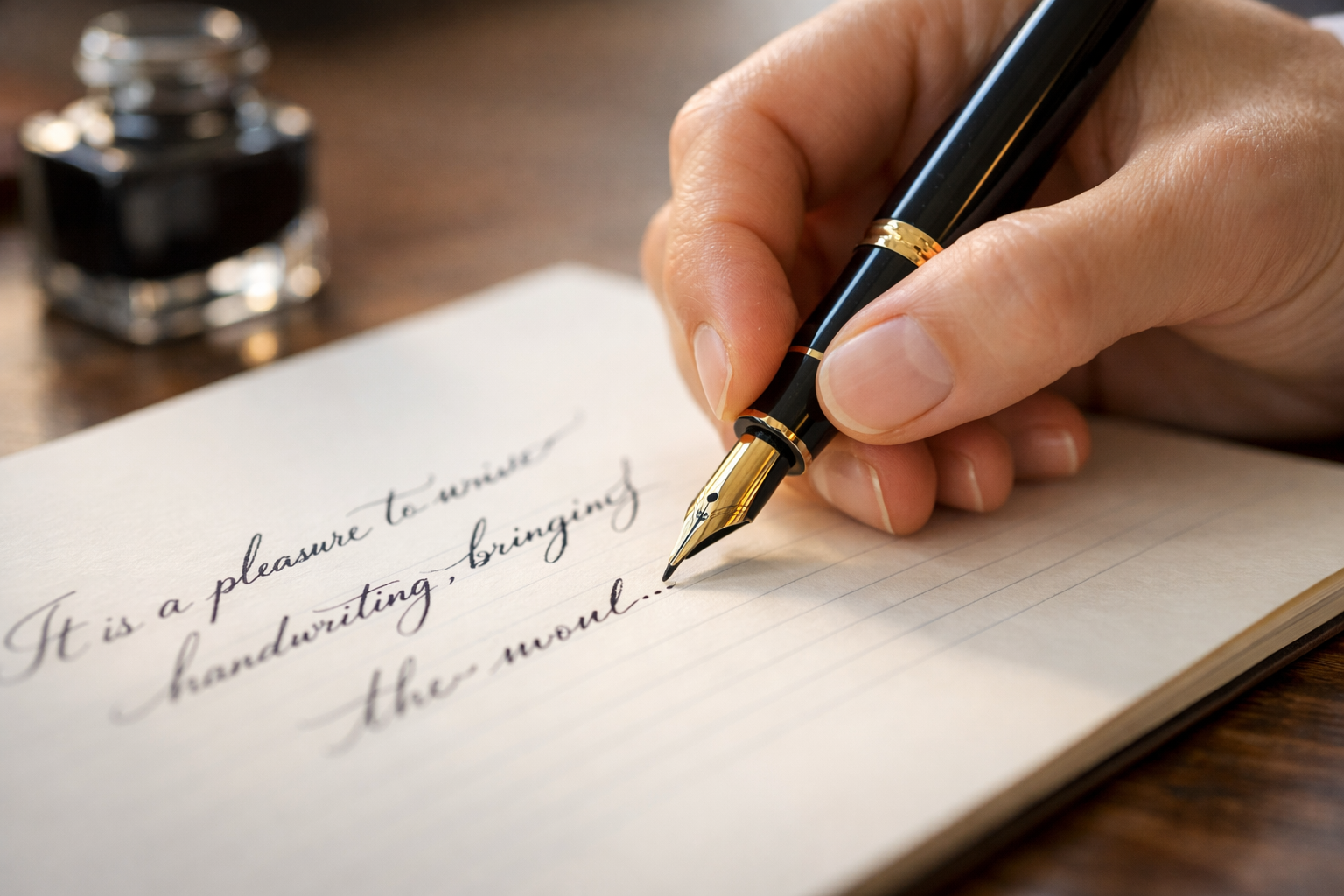
Writing by hand is more than just a way to get your thoughts down on paper; it also shows your personality, discipline, and clarity of thought. People work hard to have the best handwriting in the world because it makes a lasting impression, whether it’s on schoolwork, business documents, or personal letters. To have beautiful handwriting, you need to be clear, stylish, and consistent. You also need to practise, be patient, and use the right method. This guide will cover everything you need to know about improving your handwriting, from learning about different styles to advanced techniques and exercises you can do at home.
Why handwriting is still important in the digital age
Handwriting may seem old-fashioned in a time when typing and digital communication are the norm. But handwriting is still very important for brain development, making a good impression at work, and being creative. Handwriting uses the brain in a different way than typing, which helps with memory, understanding, and critical thinking. Writing by hand helps students remember things better, and professionals with neat handwriting make a better impression in meetings, presentations, and official documents. Well-written letters and notes, even personal ones, feel more real and warm. If you want your writing to communicate more than just words, you need to work on getting the best handwriting in the world.
Different Ways to Write
To get great handwriting, you need to know about different styles of writing. Each style has its own advantages and can be customised for different uses. Cursive writing has letters that flow together and is great for personal notes and letters. Block letters or print letters are clear, easy to read, and good for official papers. Calligraphy is an artistic style that focuses on decorative writing. It is often used for creative projects, certificates, and invitations. Italic style is both elegant and fast. The letters are slightly slanted and evenly spaced. You can pick and choose parts of these styles to make your own version of the best handwriting in the world.
Important Tools for Better Handwriting
Getting the right tools is very important for writing neatly. The quality of your pens, pencils, and paper can have a big impact on how well you can control your writing, how comfortable you are, and how much you get done. Gel pens and fountain pens have smooth ink flow, but pencils, especially soft ones like 2B, are easier to control when you practise. Paper with clear lines or grids helps keep the size and alignment of letters the same. Using guides or rulers can help make straight lines and margins even better. Choosing the right tools makes your practice sessions more fun and useful, which makes it easier to get the best handwriting in the world.
How to Change Your Handwriting
To get better at writing, you need to have a plan. Start by looking at your current handwriting and paying attention to the shapes of the letters, the space between them, how they are lined up, and how they are slanted. Before making any changes, figure out what needs to be better. The next step is to practise the basic strokes that make up all letters. You should practise drawing vertical, horizontal, and curved lines over and over again until you can do it with accuracy and control. Once you know how to do basic strokes, work on each letter by writing it out several times with lined guides to keep it consistent. You should also pay attention to how things are spaced and lined up. Keeping a consistent slant and size and leaving enough space between letters and words makes the text easier to read and keeps it neat. Consistency is important, and if you practise for 20 to 30 minutes every day, you will see big improvements over time. Copying handwriting samples from experts is a good way to learn about formation, flow, and style. It will help you get closer to having the best handwriting in the world.
Things You Shouldn’t Do
A lot of people have trouble getting their handwriting just right. Not paying attention to posture or grip, writing too quickly, having uneven letter sizes, inconsistent spacing, and sloppy curves are all common mistakes that can slow down progress. To fix these problems, you need to practise mindfully, put in conscious effort, and review regularly. If you pay attention to each stroke, letter, and word, you will slowly but surely get better. If you want to have the best handwriting in the world, you need to avoid these common mistakes.
Writing exercises to improve your skills
To get better at control, fluidity, and accuracy, you need to practise regularly. Start with drills for the alphabet, going over each letter many times until it feels natural. When writing in cursive, pay attention to how you connect the letters so that the transitions between them are smooth. Practising how to form words makes handwriting more consistent and even. Writing full paragraphs builds endurance, which helps you keep your handwriting neat even when you write for a long time. Daily workouts not only improve muscle memory, but they also help you remember the style, which makes you look more polished and professional. To get the best handwriting in the world, you need to do these exercises every day.
How to Keep Your Handwriting Neat
To keep your handwriting looking good, you need to have both good habits and useful strategies. Good posture, relaxed wrist and hand muscles, and the right way to hold a pen keep you from getting tired and make writing easier. Writing at a steady pace improves accuracy, and going over and fixing mistakes makes sure that you keep getting better. Using good pens and notebooks helps you get more done. If you stick to these habits, your handwriting will not only be easy to read, but it will also look good, bringing you closer to having the best handwriting in the world.
Advanced Methods for Great Handwriting
For people who want to be perfect, advanced techniques can take handwriting from neat to amazing. Checking the space between letters makes sure that the letters are the right size and shape. Changing angles and slants can make things look better and go faster. Regular checks for consistency, in which you compare samples of handwriting over time, help you keep track of your progress. Controlling how hard you press the pen keeps the strokes even and the writing clear. Combining classic techniques with your own style can help you develop a unique handwriting style. It takes a lot of work to learn these advanced techniques, but in the end, they will make your writing some of the best in the world.
Handwriting’s Importance in the Workplace
Writing by hand is not only a skill that looks good; it also has useful uses in the workplace. Official papers, reports, and letters can stand out if they are written in clear, easy-to-read handwriting. Employers often see neat handwriting as a sign of professionalism, discipline, and attention to detail. Writing notes by hand during meetings or brainstorming sessions can be more powerful than typing them because they show that you care and are involved. People of all ages, from students to professionals to artists, can benefit from handwriting that shows care, clarity, and confidence. So, having the best handwriting in the world can make you more credible in both your personal and professional life.
Writing by hand and brain growth
Studies in science have shown that writing by hand has special benefits for the brain. Writing by hand activates brain areas that are responsible for memory, learning, and fine motor skills. It helps you focus, understand, and remember things better than typing does. Students who write by hand often do better in school, and adults who keep up their handwriting skills can improve their mental clarity and dexterity. So, trying to get the best handwriting in the world isn’t just about how it looks; it’s also about how it helps your brain and development.
Beautiful Handwriting Used in Creative Ways
Handwriting can be a way to express yourself artistically as well as for practical purposes. Fine penmanship is important for calligraphy, decorative lettering, and personalised notes. Writers and artists often use handwriting to show how they feel and how creative they are. When you write in journals, diaries, and scrapbooks with care, they become more interesting and expressive. Even the way you write every day can show who you are and what you like. Having the best handwriting in the world lets you be creative while still writing clearly and beautifully.
Questions and Answers About Handwriting
Q: How long does it take to write the best handwriting in the world?
A: How much you improve depends on how hard you work and how much you practise. If you practise for 20 to 30 minutes every day, you should see changes in a month. It may take several months to master the skill.
Q: Is it possible for adults to get better at writing?
A: Yes, adults can greatly improve their handwriting if they practise in a structured way, use the right tools, and pay attention to technique.
Q: What is the best style of handwriting?
A: There isn’t one best style. The choice depends on what you want to do, what you like, and the situation. Print is clear, cursive is pretty, and calligraphy is artful. Combining styles often leads to great results.
Q: Do certain pens help you write better?
A: For smooth and even writing, gel pens and fountain pens are usually the best choices. Soft pencils are also helpful for practice.
Q: Does writing by hand change how the brain grows?
A: Yes, writing by hand activates many parts of the brain, which improves memory, understanding, focus, and fine motor skills.
Q: What can I do to keep my handwriting nice after I’ve improved it?
A: To keep your handwriting clear and stylish over time, you should practise regularly, sit up straight, use good tools, and look at samples of your handwriting from time to time.
Q: Is it worth it to practise writing by hand in the digital age?
A: Yes, for sure. Writing by hand improves cognitive skills, makes a lasting impression in both personal and professional settings, and lets you express yourself creatively in a way that typing can’t.
In conclusion
To get the best handwriting in the world, you need to be patient, practise, and pay attention to the little things. Anyone can make their writing look nice, readable, and professional by learning about different styles of handwriting, using good tools, doing structured exercises, and keeping up good habits. Not only is beautiful handwriting pretty to look at, but it also improves cognitive skills, personal expression, and professional credibility. If you work hard and practise regularly, your handwriting can leave a lasting impression that shows off your skill, discipline, and uniqueness.