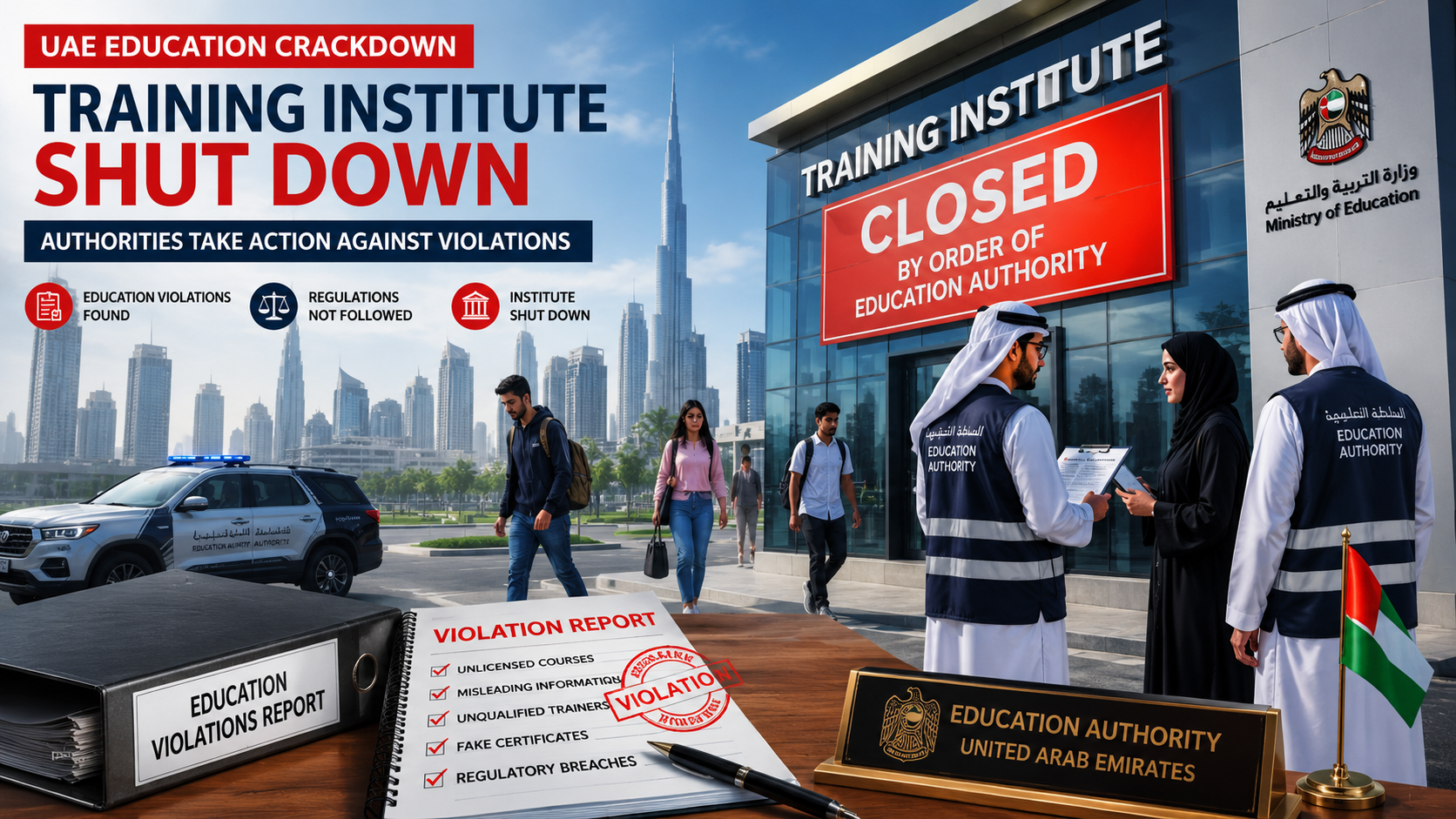
The UAE education sector continues to grow at a fast pace. Thousands of students, professionals, and international learners choose the country for quality education and career-focused training programs. At the same time, UAE authorities maintain strict rules to protect students and maintain high academic standards. Recent action against a training institute shows how serious regulators remain about educational compliance and student protection.
The headline “UAE shuts training centre, records 21 education violations” has gained attention across the education and business sectors. The case highlights the UAE government’s commitment to quality education, legal compliance, and transparent academic practices. Authorities closed the institute after identifying multiple violations linked to educational operations, licensing issues, and administrative failures. This action sends a strong message to all educational institutions operating in the country.
The UAE has invested heavily in becoming a regional hub for education and professional training. Because of this vision, government departments closely monitor private institutes, vocational centres, and academic organizations. Regulators expect every institute to follow approved standards, maintain proper documentation, and provide students with reliable services. Any failure can lead to penalties, suspension, or permanent closure.
This report explains why the authorities took action, what the violations mean, how the decision affects students and training providers, and why compliance has become more important than ever in the UAE education sector.
Why the UAE Education Sector Faces Strict Regulation
The UAE government places education among its top national priorities. Authorities aim to create a learning environment that supports innovation, professional growth, and global competitiveness. To achieve this goal, educational institutions must follow clear rules related to licensing, curriculum approval, instructor qualifications, student records, and operational transparency.
Training centres operate under specific guidelines issued by local education authorities and economic departments. These rules help protect students from misleading programs, fake certifications, and poor academic standards. Regulators conduct inspections throughout the year to ensure institutes meet all legal and educational requirements.
The recent case where the UAE shuts training centre, records 21 education violations demonstrates how authorities respond when institutions fail to meet these standards. Officials do not only focus on academic quality. They also review financial transparency, advertising practices, certification procedures, and student services.
Educational compliance matters because students invest significant time and money into training programs. When institutions break rules, students may face financial losses, invalid certificates, or career setbacks. Strict regulation helps prevent such risks and maintains trust in the UAE education system.
Details Behind the Training Centre Closure
Authorities launched an inspection after receiving reports related to operational irregularities at the training institute. During the investigation, inspectors identified multiple violations connected to administrative practices, educational procedures, and legal compliance requirements.
Officials confirmed that the institute failed to meet several mandatory standards required for licensed educational operations. Some violations reportedly involved unauthorized academic activities, improper certification procedures, and issues related to instructor approvals. Regulators also examined whether the centre followed approved teaching frameworks and maintained accurate student records.
The announcement that UAE shuts training centre, records 21 education violations reflects the seriousness of these findings. A high number of violations usually indicates repeated compliance failures rather than isolated mistakes. Authorities often take stronger action when institutes ignore warnings or continue operating outside approved regulations.
The closure also highlights the growing focus on accountability within the UAE education market. Regulators expect institutes to maintain transparency in every aspect of their operations. This includes marketing claims, tuition policies, classroom standards, and certification procedures.
Officials have not only focused on punishment. Their actions also aim to protect current and future students from potential academic and financial harm. By shutting down non-compliant institutes, authorities strengthen confidence in licensed educational providers across the country.
Common Education Violations Found in Training Institutes
Training institutes can face penalties for several types of violations. In many cases, problems start when institutions try to expand quickly without updating licenses or operational approvals. Some institutes also fail to maintain proper academic systems after increasing student enrollment.
One common issue involves offering unapproved courses or certifications. Educational institutions must receive official permission before launching new programs. Regulators review course structures, learning outcomes, and instructor qualifications before granting approval.
Another major concern involves misleading advertising. Some institutes promote unrealistic career guarantees or use false accreditation claims to attract students. Authorities consider such practices harmful because they mislead learners and damage trust in the education sector.
Instructor qualifications also remain a key compliance area. Institutes must hire approved trainers with relevant academic and professional backgrounds. Failure to verify instructor credentials can lead to serious penalties.
Poor record management represents another frequent violation. Educational centres must maintain accurate attendance records, examination data, certification details, and financial documents. Regulators often inspect these records during compliance reviews.
The case where UAE shuts training centre, records 21 education violations may involve several of these issues combined. When authorities identify repeated non-compliance across multiple areas, closure becomes more likely.
Impact on Students and Parents
Students usually face the biggest challenges when authorities close a training institute. Many learners worry about unfinished courses, pending certifications, and tuition refunds. Parents also become concerned about academic continuity and future career opportunities for their children.
In such situations, UAE authorities often work to protect student interests. Regulators may guide affected learners toward approved institutes or help them recover official documents and academic records. Government departments also investigate whether the institute violated consumer protection laws related to tuition fees and service commitments.
Students should always verify an institute’s licensing status before enrolling in any course. This simple step can reduce the risk of academic disruption. Licensed institutes usually display official approvals and accreditation information clearly on their websites and promotional materials.
The news that UAE shuts training centre, records 21 education violations serves as a reminder for students to research institutions carefully. Learners should confirm course approvals, instructor qualifications, and certification validity before making financial commitments.
Parents can also protect themselves by reviewing institute reviews, checking government registration details, and asking questions about accreditation. Educational transparency helps build trust and reduces the possibility of future complications.
How the UAE Protects Education Standards
The UAE follows a proactive approach toward educational quality assurance. Authorities conduct routine inspections, investigate complaints, and review operational procedures regularly. Educational departments work closely with licensing authorities to ensure institutes follow approved standards.
Government agencies also update regulations to match international education trends and market demands. This helps maintain a competitive learning environment while protecting students from unethical practices.
Digital monitoring systems have improved compliance tracking across the UAE education sector. Authorities can now review licensing data, certification records, and operational details more efficiently. This technology-driven approach strengthens oversight and reduces the risk of unauthorized educational activities.
The action where UAE shuts training centre, records 21 education violations reflects the effectiveness of these monitoring systems. Regulators identified compliance issues before they could affect more students or damage educational standards further.
Authorities also encourage institutes to improve internal compliance systems. Many training centres now invest in legal advisors, quality assurance teams, and operational audits to avoid regulatory problems.
Educational institutions that maintain transparency and follow official guidelines usually build stronger reputations and attract more students. Compliance has become a major factor in long-term success within the UAE education market.
Why Educational Compliance Matters for Businesses
Training centres operate as both educational institutions and commercial businesses. This means they must follow academic regulations as well as business laws. Compliance failures can damage reputation, reduce student trust, and create financial losses.
Businesses that ignore educational standards often face penalties, suspension, or closure. Negative publicity can also affect future partnerships and student enrollment. In highly competitive markets like the UAE, reputation plays a major role in business growth.
Professional training centres must understand local regulations clearly before launching programs or marketing services. They should maintain proper licensing, update approvals regularly, and monitor operational practices carefully.
The case where UAE shuts training centre, records 21 education violations highlights the financial and reputational risks linked to non-compliance. Even established institutes can face serious consequences if they fail to meet official standards.
Compliance also supports long-term business sustainability. Institutions that follow regulations can build trust with students, employers, and government authorities. This trust creates stronger market positioning and better growth opportunities.
Educational businesses should view compliance as an investment rather than a burden. Proper systems, transparent communication, and regular audits can help institutes avoid major regulatory problems.
The Growing Importance of Quality Education in the UAE
The UAE continues to position itself as a leading regional education hub. International universities, professional training institutes, and vocational centres operate across major cities including Dubai and Abu Dhabi. This growth increases the need for strong regulation and quality control.
Students now expect globally recognized certifications, modern learning methods, and career-focused training programs. Authorities understand these expectations and continue improving education standards across the country.
Educational quality directly affects workforce development and economic growth. Skilled professionals support industries such as technology, healthcare, aviation, hospitality, and finance. Because of this connection, regulators monitor training providers closely.
The report that UAE shuts training centre, records 21 education violations reflects broader efforts to strengthen educational credibility nationwide. Authorities want students and employers to trust the certifications issued within the country.
High-quality education also supports international investment and business confidence. Companies prefer operating in regions with reliable educational systems and skilled workforces. This makes educational regulation an important part of the UAE’s long-term economic strategy.
Warning Signs Students Should Never Ignore
Students should remain alert when evaluating educational institutions. Some warning signs may indicate compliance or quality issues. Understanding these risks can help learners make safer decisions.Institutes that avoid sharing licensing information may create problems later. Students should always ask for official approval details before enrollment. Genuine institutions usually provide transparent answers and official documentation.
Unrealistic promises also represent a major warning sign. No institute can guarantee jobs, visas, or instant career success. Students should remain cautious if marketing campaigns sound exaggerated or misleading.
Poor communication and unclear fee structures may indicate operational problems. Reliable institutes maintain professional communication and explain all financial policies clearly.Students should also review online feedback carefully. Repeated complaints about certifications, refunds, or academic quality may signal deeper compliance issues.
The case where UAE shuts training centre, records 21 education violations reminds learners that careful research matters before joining any training program. A small amount of verification can prevent major academic and financial problems later.
Future Outlook for UAE Training Institutes
The UAE education sector will likely become even more regulated in the coming years. Authorities continue introducing stricter monitoring systems and updated operational standards. Training centres must adapt quickly to maintain compliance and competitiveness.
Digital education platforms, hybrid learning models, and international certification partnerships will continue shaping the industry. Regulators may introduce new guidelines to manage these evolving educational formats effectively.
Institutes that invest in quality assurance, transparent operations, and student support systems will likely perform better in the long term. Compliance will remain a central factor in institutional success.
The announcement that UAE shuts training centre, records 21 education violations may encourage other institutions to review their own systems carefully. Many providers will likely strengthen internal audits and legal compliance procedures to avoid similar action.
Educational transparency will also become more important for student recruitment. Learners increasingly research accreditation, institutional reputation, and regulatory standing before enrollment decisions.
The UAE’s focus on quality education creates opportunities for responsible training providers while reducing space for non-compliant operations. This approach benefits students, employers, and the broader economy.
FAQs
Why did UAE authorities shut down the training centre?
Authorities closed the institute after identifying multiple educational and operational violations during inspections. Officials found serious compliance issues that reportedly affected licensing standards and academic procedures.
What does “UAE shuts training centre, records 21 education violations” mean?
The phrase refers to a regulatory action where UAE authorities identified 21 separate education-related violations at a training institute and ordered its closure due to non-compliance.
How do education violations affect students?
Education violations can create academic delays, financial losses, certification issues, and uncertainty about course validity. Authorities usually work to protect student interests after such cases.
How can students verify if a training institute is licensed?
Students can check official education authority websites, request license details directly from the institute, and confirm accreditation status before enrollment.
What are common violations in training institutes?
Common violations include unapproved courses, misleading advertising, poor record management, unauthorized certifications, and failure to meet instructor qualification standards.
Will UAE increase education regulations in the future?
The UAE will likely continue strengthening education regulations as the sector grows. Authorities aim to improve quality assurance, transparency, and student protection across all educational institutions.
Conclusion
The case where UAE shuts training centre, records 21 education violations highlights the country’s strong commitment to educational quality and student protection. Authorities continue enforcing strict standards to maintain trust in the UAE education system and prevent unethical practices within the training industry.
This action sends a clear message to educational institutions across the country. Compliance is no longer optional. Institutes must follow approved guidelines, maintain transparent operations, and protect student interests at every level.
Students and parents can also learn important lessons from this development. Careful research, verification of licensing status, and attention to institutional credibility remain essential before enrolling in any program.
The UAE education sector continues to grow rapidly, but growth must align with quality and accountability. Regulatory action against non-compliant institutes helps create a safer and more reliable learning environment for everyone.
As the UAE strengthens its position as a global education hub, authorities will likely continue monitoring institutions closely. Training centres that focus on compliance, transparency, and academic quality will remain best positioned for long-term success.