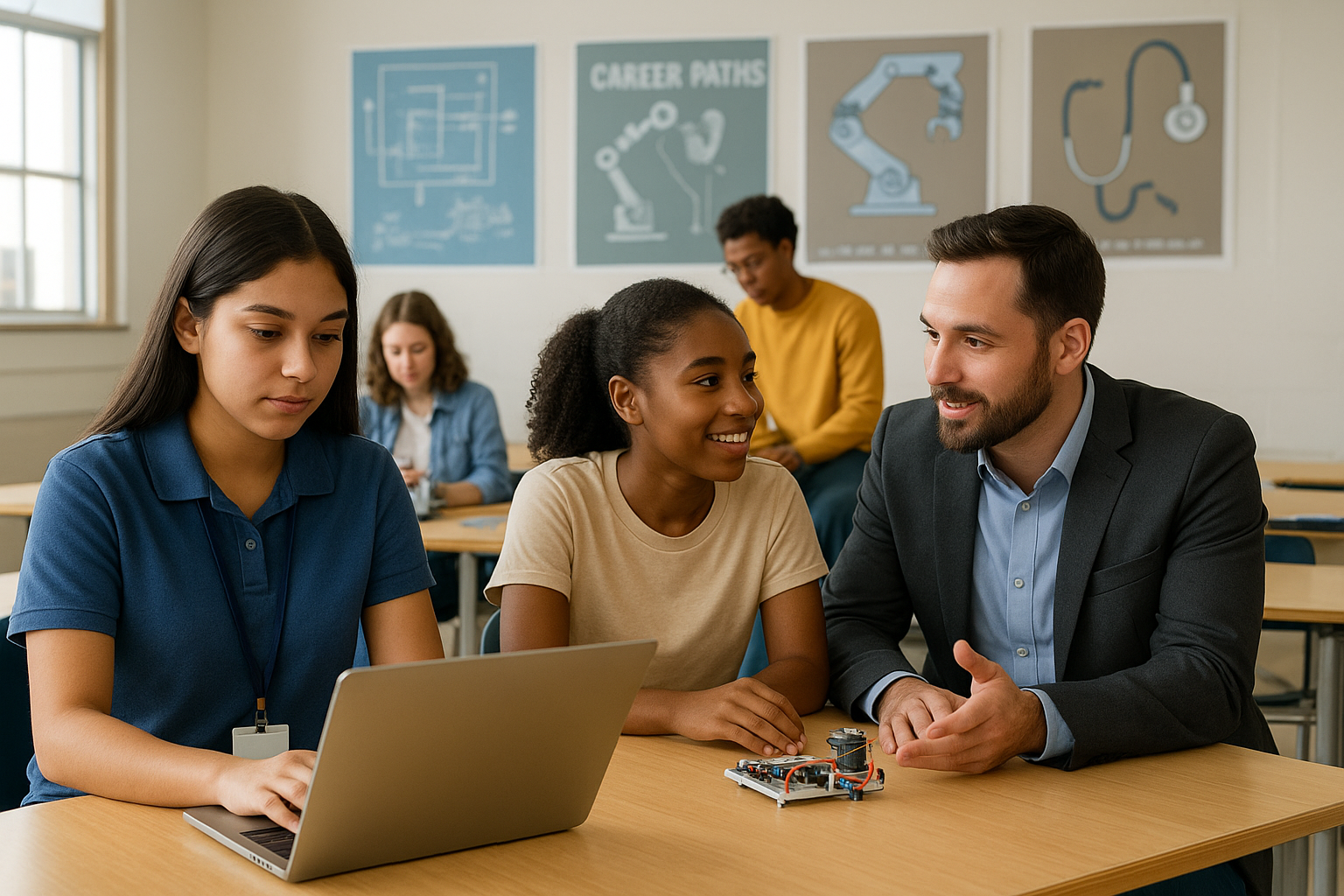
Education nowadays isn’t just about books and classrooms. Work-Based Learning (WBL) is one of the best ways for modern schools to get students ready for real-world problems.
What is work-based learning in high school, and why is it becoming an important part of education in the 21st century?
Work-based learning links what you learn in the classroom to what you do in the real world. It helps students use what they learn in school in the real world, which helps them get ready for jobs, learn how to act professionally, and better understand their future career paths.
This guide goes over everything you need to know about work-based learning in high school, such as what it is, the different types, the benefits, examples, and how it affects students’ futures.
What does it mean to learn at work in high school?
Work-based learning in high school is a way to learn that combines schoolwork with real-world work experiences. It helps students learn about the real world of work while still going to school.
In simpler terms, students learn outside of the classroom through internships, apprenticeships, job shadowing, and cooperative education programs. These chances let them use what they’ve learnt in school in the real world, which helps them learn more and get ready for a job.
Work-based learning fills the gap between school and work by giving students skills, confidence, and experience that employers want. This way, they don’t just get grades when they graduate.
Important Parts of Learning at Work
There are a few things that all successful work-based learning programs have in common that make them work:
Classroom Integration: What students learn at work is directly related to what they learn in school. For example, a student studying marketing might work part-time at a store to learn how to get customers to interact with them.
Employer Partnerships: Schools work with businesses, government groups, and nonprofits in the area to give students real-world work experiences.
Supervised Learning: Each student is helped by mentors from both school and work, which makes sure that they learn in a structured way and improve their skills.
Reflection and Assessment: Students think about their work experiences, write down what they learnt, and get feedback on how well they did.
Different kinds of work-based learning programs in high schools
High schools offer a number of different types of work-based learning programs, each designed to help students reach different learning goals and levels of experience:
1. Following someone at work
Job shadowing lets students watch professionals do their jobs in real life. Before choosing a career path, this short-term experience helps them learn about different jobs and what they will have to do every day.
2. Internships
Internships let students work for a business or group for a certain amount of time. They get real-world experience, learn how to talk to people in a professional way, and often get credit for their work.
3. Apprenticeships
Apprenticeships are programs that last a long time and teach you things in the classroom and on the job. Students learn specialised technical or trade skills under the watchful eye of an expert. This is great for fields like healthcare, engineering, or construction.
4. Cooperative Education (Co-op)
Co-op programs combine schoolwork with work experience, either part-time or full-time. Students learn in the classroom and work at the same time, which helps them grow both academically and professionally.
5. Learning through service
Students do community service projects that are related to their schoolwork as part of service learning. This kind of learning at work helps people become more responsible citizens and work together, and it also helps them become better at solving problems and leading others.
6. Businesses run by schools
Some schools have their own small businesses, like a school store or a digital marketing agency, where students can learn about being an entrepreneur in a safe setting.
Advantages of Work-Based Learning in Secondary Education
1. Looking into different jobs
By looking into different fields, students can find out what they like and what they’re good at early on. This helps them make smart decisions about their future education and jobs.
2. Learning new skills
Students learn important technical, social, and problem-solving skills through WBL programs. They learn how to work together, talk to each other, manage their time, and be flexible—all things that employers value highly.
3. Academic Importance
When students see how what they learn in school applies to the real world, they become much more interested in and motivated to learn.
4. Networking with professionals
Students can meet professionals, mentors, and employers through work-based learning who can help them find jobs or internships in the future.
5. Job openings
After finishing their work-based learning experiences, a lot of students go straight to full-time jobs. Some people even get job offers before they graduate.
6. Getting ready for college and a job
Students become more competitive in the job market by getting hands-on experience that helps them figure out what they want to do with their lives and get ready for college and work.
How Schools Use Work-Based Learning
Schools, businesses, and communities all need to work together to make a WBL program work. In general, this is how it works:
Partnership Development: Schools work with businesses, industries, and groups in their area to build relationships.
Student Selection: Students who want to work in certain fields are matched with employers who are a good fit for them.
Plans for Training: A structured learning plan is made that lists tasks, skills, and goals.
Supervision and Mentorship: Students get help from supervisors at work and teachers at school all the time.
Performance Evaluation: Reports, feedback sessions, and skill tests are used to see how well students are doing.
Here are some examples of work-based learning in action.
- A high school senior who wants to work in healthcare is interning at a hospital, where she helps nurses and watches medical procedures.
- A student who loves technology signs up for a coding apprenticeship program, where they learn from software engineers and get school credit.
- A group of students runs a café at school, taking care of marketing, budgeting, and customer service.
- A business studies class works with a local startup to make social media campaigns, giving them real-world marketing experience.
These examples show that work-based learning helps students learn in the real world while also building on what they already know.
Problems with Learning on the Job
Work-based learning has a lot of advantages, but it also has some problems:
Limited Access: Some schools don’t work with businesses in the area.
Conflicts in Scheduling: It can be hard to balance schoolwork and work.
Equity Issues: Students from rural or low-income areas may not have as many chances.
Employer Commitment: Some companies may not have the money to offer structured training.
But with the right planning and working together with the community, these problems can be solved to make sure that all students have equal access.
The Future of Learning at Work in High Schools
As industries change because of technology, automation, and globalization, schools are putting more focus on preparing students for careers and hands-on learning. Work-based learning is no longer just an option; it’s becoming a key way to get students ready for jobs in the future that will require both knowledge and practical skills.
As more schools use digital platforms and virtual internships, the future of work-based learning will include both in-person and online experiences, giving students more options that are more flexible and varied.
Frequently Asked Questions About Work-Based Learning in High School
1. What is the main goal of work-based learning in high school?
The main goal is to link what students learn in class with what they do on the job, which helps them learn useful skills and think about different career options.
2. What makes work-based learning different from regular school?
Traditional education is more about theory, while work-based learning is more about how to use what you learn in the real world.
3. Do students get paid to work while they are learning?
Some programs, such as internships and apprenticeships, pay participants, while others, such as service learning, do not pay participants but instead focus on gaining knowledge.c
4. What kinds of jobs can students look into through work-based learning?
Students can look into jobs in many fields, such as healthcare, technology, business, construction, hospitality, marketing, and more.
5. How long does a normal work-based learning program last?
It depends on the type. Job shadowing might only last a few days, but internships and apprenticeships can last for a whole academic year or even longer.
6. Can learning on the job help you get into college?
Colleges do value real-world experience. Work-based learning shows that you are proactive, responsible, and involved in the real world, which are all good traits for applicants.
7. Is work-based learning good for all students?
Yes, every student can benefit from hands-on experience, but the programs may be different depending on what they want to learn, their goals, and the resources available at their school.
8. How can parents help their kids learn at work?
Parents can help by encouraging their kids to explore, keeping in touch with their teachers, and helping their kids learn how to manage their time and responsibilities.
9. Do students get credit for learning while working?
Yes, in a lot of schools, students get credit based on how well they do, how many hours they work, and what they learn.
10. What skills do students learn by working?
Students learn how to talk to others, work in groups, lead, use technology, and solve real-world problems, all of which will help them in their future careers.
Final Thoughts
Work-based learning in high school is a great way to connect school and work. It gives students the power to follow their interests, learn useful skills for their careers, and make smart choices about their futures.
WBL makes people confident, capable, and ready for a career by combining academic learning with real-world experience. This prepares them to succeed in a global economy that is always changing.